Open 7 days: Mon to Sat 7am to 9:30pm, Sun 9am to 9pmLicensed and insured, MHIC #1459775921 Moravia Park Dr b6, Baltimore, MD 21206
Countertop services in Baltimore

Granite Countertop Sealing, Polishing and Stain Protection in Baltimore

Natural stone is porous, and the sealer that protects it wears down a little with every wipe and spill. TopStone Granite is a Baltimore countertop fabricator and installer that cleans, polishes and reseals granite, marble and quartzite countertops so they keep resisting stains and look the way they did on install day.

Sealing visits are for owners of stone tops of any age, whether we installed them or not. If water darkens your countertop, or a dull film will not wipe away, it is time for professional care, and it is a service most stone owners need again every few years.

Our team has 15+ years in stone and 650+ completed countertop jobs. TopStone is licensed and insured under MHIC #145977, which you can check on the Maryland Home Improvement Commission license lookup, and we serve Baltimore and homes within about an hour of our Northeast Baltimore shop.

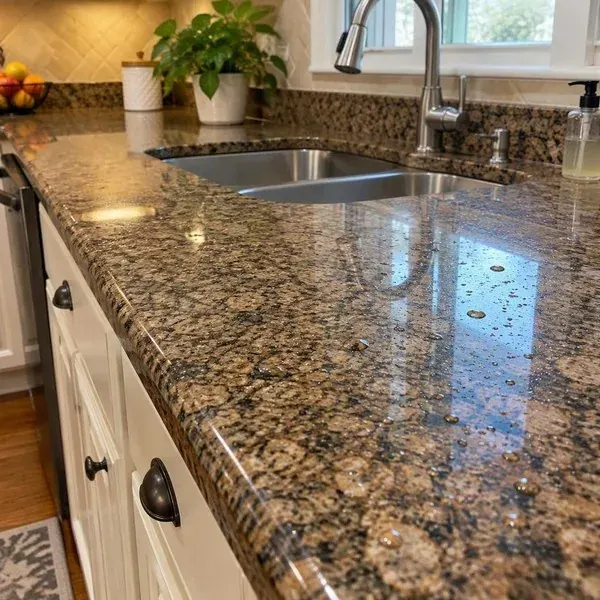
Water beading on a freshly sealed brown granite countertop beside an undermount sink in Baltimore
Licensed and insured
MHIC #145977
  • 15+years fabricating and installing
  • 650+countertop jobs completed
  • 7 daysopen every day of the week
  • Localshop on Moravia Park Drive, Baltimore

Our Stone Sealing and Polishing Services

A professional sealing visit is more than wiping on a bottle of sealer. Each one is matched to your stone and the shape it is in.

  • Deep cleaning with stone-safe cleaners to lift grease, soap film and old sealer residue
  • Stain removal with a poultice chosen for the type of stain, oil-based or organic
  • Polishing dull spots, water rings and haze back to an even sheen
  • Impregnating sealer selected for your stone's porosity, applied and fully buffed off
  • Follow-up care advice on cleaners, cutting boards and when to test again

Got a chip, an open seam or a loose sink as well? Our countertop repair team can often handle it in the same visit, before the stone is sealed.

Which Countertops Need Sealing

Whether a countertop needs sealing depends on the material and, with granite, on the specific slab. Here is how the common surfaces compare.

Granite

Granite varies more than any other countertop stone. Many dense, dark granites absorb so little that sealer just sits on top, while lighter, coarse-grained granites can soak up water in minutes.

That is why we test before sealing, since over-applying sealer to dense granite is a common cause of cloudy film. Our granite countertops page explains how different slabs compare.

Marble

Marble should be sealed against stains from oil, wine and coffee. Sealer does not stop etching, though, because etching is acid reacting with the stone itself rather than something soaking in.

Etch marks need honing and polishing, covered in depth on our marble countertop repair page.

Quartzite

True quartzite is very hard but often more porous than people expect, so it usually needs sealing. Some stones sold as quartzite are really dolomite or marble, and they need different care.

Our quartzite countertops page explains how to tell them apart.

Quartz and Solid Surface Do Not

Engineered quartz and solid surface are non-porous, and quartz makers advise against sealing them. A sealer has nowhere to go and leaves residue on top. Porcelain and sintered stone are the same.

If quartz looks blotchy or dull, the cause is usually cleaner film, not a missing seal. See the care notes on our quartz countertops page instead of booking a sealing visit.

The Water Test: Does Your Countertop Need Resealing?

You can check your own countertops in about 15 minutes with a glass of water and a timer. It is the same quick check we use before deciding how much sealer a top needs.

  1. Pick three spots that see daily use: beside the sink, next to the cooktop, and your main prep area.
  2. Pour a puddle about three inches across in each spot.
  3. Check at 5, 10 and 15 minutes, then wipe the water away and look at the stone.
What you see What it means
The stone darkens within about 5 minutes It is absorbing fast. Seal now, likely with more than one coat.
The stone darkens after 10 to 15 minutes Protection is fading. Plan to reseal soon.
No darkening after 15 minutes or longer The seal is working, or the stone is dense enough not to need one.

A dark spot from the test dries out on its own and does no harm. Test the sink area most often, because that is where sealer wears away first.

How Professional Sealing Works

Good sealing is mostly preparation and cleanup. Here is what happens on a visit.

  1. Clean. Grease, soap film and old sealer residue come off so the new sealer can soak in rather than sit on top.
  2. Treat stains. Stubborn oil or organic stains get a poultice that draws them out of the stone. Deep stains can need the poultice left for a day or more, and we will tell you if a return visit makes sense.
  3. Dry. Damp stone will not take sealer evenly, so the surface must be fully dry before anything is applied.
  4. Apply and dwell. Impregnating sealer is worked in section by section and left for the time its maker specifies. Thirsty areas get a second coat.
  5. Remove the excess. Every bit of surface sealer is wiped and buffed off. This step is the difference between a clear finish and a hazy one.
  6. Cure. Most impregnating sealers ask you to keep the top dry for a few hours and to avoid spills and harsh cleaners for a day or more. We give you the exact times for the product used.

An impregnating sealer works below the surface and leaves no film, so it does not change the look of your stone. Topical coatings that build a shiny layer are made for floors, and on countertops they scratch, peel and trap stains.
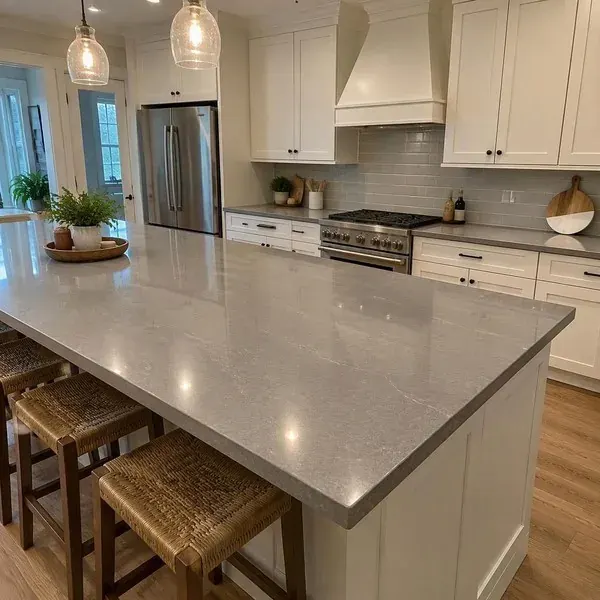
Sealed gray stone kitchen island reflecting pendant lights after professional countertop sealing

Polishing Dull or Hazy Stone

A cloudy countertop is not always a worn one. We work out which of these you have before choosing the fix.

  • Sealer residue. Sealer that was never buffed off leaves a smeary film, often worst on dense dark granite. It comes off with a stripper and buffing.
  • Cleaner film. Dish soap, all-purpose sprays and some store-bought granite products build up a dull layer. A deep clean usually clears it.
  • Hard water deposits. White rings and crust around the faucet come off with a stone-safe treatment, never vinegar.
  • Worn polish. In heavy-use zones the stone itself loses its shine. Polishing compounds restore light wear in place.

On marble, dull patches are usually etch marks rather than worn polish. When dullness covers the whole top, full countertop resurfacing restores it by grinding and re-polishing the entire surface.

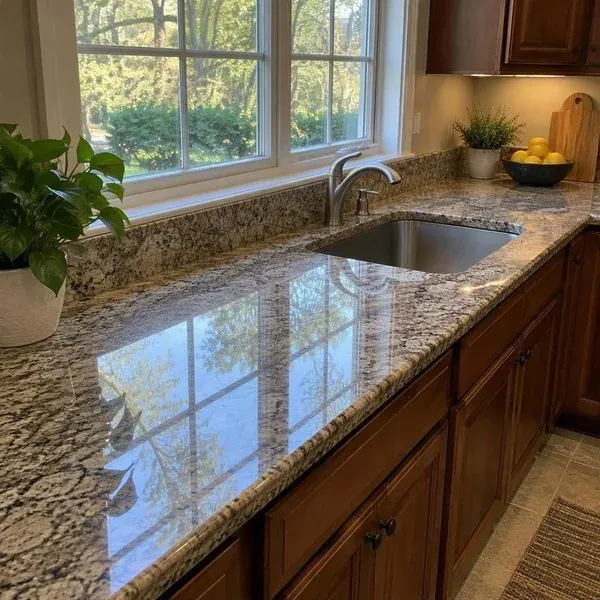
Polished granite countertop by a kitchen window with a clear reflection after haze removal

Sealing Vanities, Islands and Outdoor Counters

Kitchens get most of the attention, but every stone surface in the house wears its sealer differently. We adjust the visit to where the stone lives.

Bathroom Vanity Tops

Hair oils, lotions, makeup and hair dye are among the hardest stains to lift from light granite and marble. Vanities also see hot water and soap film at the faucet every day.

A small vanity is quick to seal, so it is worth adding to a kitchen visit. Planning a new one instead? See bathroom vanity countertops.

Outdoor Kitchen Counters

Outdoor granite deals with rain, pollen, grill grease and Maryland winters. Water that soaks into porous stone and then freezes adds stress over time, so a sound seal matters more outside than in.

Outdoor stone usually needs resealing more often than indoor tops. Our outdoor kitchen countertops page covers which stones hold up best.

Stone Sealing Cost Factors

A sealing visit is one of the least expensive ways to protect a stone investment, and the price is set by the work your countertops actually need. The main drivers:

  • Total square footage, including islands, vanities and stone backsplashes
  • Stone type and porosity, since thirsty stone takes more sealer and a second coat
  • Stain removal, especially poultice work that needs a second trip
  • Stripping old sealer haze or cleaner buildup before fresh sealer can go on
  • Polishing dull areas or water rings in the same visit

Your quote lists each of these so you know exactly what is included. For repair and installation pricing across the Baltimore area, see our countertop cost guide.

Caring for Sealed Stone Between Visits

Good daily habits stretch the time between sealing visits and make each one quicker. Most of them cost nothing.

  • Wipe up oil, wine, coffee and citrus promptly, even on sealed stone.
  • Clean with warm water and a pH-neutral stone cleaner. Skip vinegar, bleach, ammonia and abrasive powders.
  • Use cutting boards and trivets, and coasters on marble.
  • Keep cooking oil bottles on a small tray rather than directly on the stone.
  • Repeat the water test every six months or so and book a visit when the stone darkens quickly.

When the test says it is time, call or email and we will find a slot that suits you. We are open seven days a week.

Answers from our team

Stone Sealing FAQs

How often should granite be sealed?

There is no single schedule, because granites vary so much. Many need resealing every one to three years, dense stones may almost never need it, and porous light granites need it more often. The water test tells you when your own top is ready.

Can I seal granite myself?

Yes. A good impregnating sealer from a stone supplier, applied to clean, dry stone and buffed off completely, works well for routine resealing. Call a professional if stains need removing first, if an old sealer has left haze, or if you are not sure whether your stone is granite, marble or quartzite.

Does sealing make granite stain-proof?

No. Sealing makes stone stain-resistant by slowing how fast liquids soak in, which gives you time to wipe up spills. Oil or wine left overnight can still mark a sealed top, though it is far easier to lift.

Will sealing change how my countertop looks?

A quality impregnating sealer should not change the color or shine of your stone. Color-enhancing sealers are different: they deliberately darken and enrich the stone, which some owners like on honed or leathered finishes. We always ask before using one.

Request a quote

Book a Sealing Appointment

Run the water test, then call or email us with what you found and what stone you have. We will book a visit to clean, treat stains, polish and seal your countertops.

Call (667) 400-3297
Call (667) 400-3297Quote