
Look at the Pattern
Quartz patterns are designed, so veining tends to look evenly spaced and repeats from slab to slab. Quartzite shows natural movement, color shifts and a glassy, crystalline sparkle where light catches the grains.
Quartz and quartzite sound almost identical, but one is a factory-made surface and the other is a natural stone quarried from the earth. Mixing them up can mean paying a premium for the wrong material, or buying a "quartzite" that etches like marble. TopStone Granite helps Baltimore homeowners sort this out before they pick a slab.
We fabricate, install and repair quartz, quartzite, granite and marble countertops across Baltimore and the surrounding counties. In 15+ years and 650+ completed jobs, we have seen how each material cuts, wears and ages. We are licensed and insured under MHIC #145977.
Below, you will find what each material is, how to tell them apart, how they compare on heat, care and price, and how to avoid mislabeled slabs.
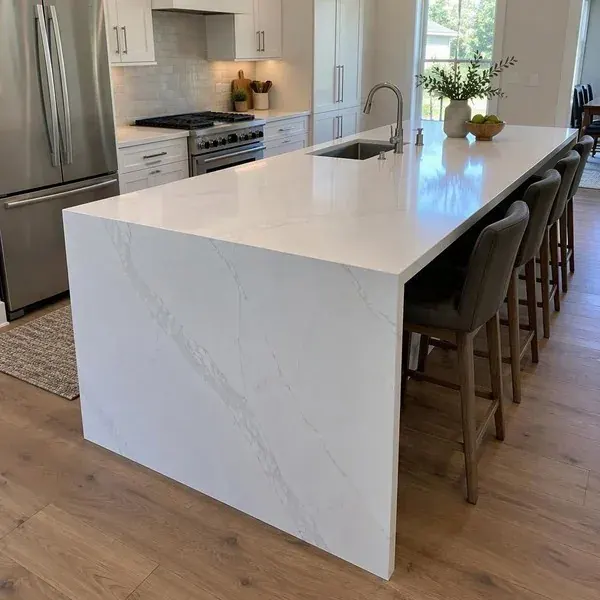
Quartz countertops are engineered slabs. Manufacturers mix crushed natural quartz, typically around 90 percent by weight, with resin binders and pigments, then press and cure the blend into slabs sold under brand and color names.
Quartzite is a natural metamorphic rock. It starts as quartz-rich sandstone, and over millions of years heat and pressure fuse the sand grains into a dense, crystalline stone. It is quarried, cut into slabs and polished just like granite and marble.
Both are built on the same mineral, quartz, which is why they are both hard and scratch resistant. The resin in one and the natural crystal structure of the other create every other difference.
| Quartz | Quartzite | |
|---|---|---|
| What it is | Engineered: quartz plus resin and pigment | Natural metamorphic stone |
| Pattern | Consistent, repeatable designs | Unique, slab to slab |
| Heat | Resin can scorch or discolor | Very heat tolerant |
| Scratches | Very scratch resistant | Very scratch resistant |
| Sealing | Never needed | Usually needed, varies by slab |
| Acid etching | Does not etch | True quartzite does not etch |
| UV and outdoor use | Most brands not rated for sun | Generally suitable |
| Fabrication | Standard | Slower, harder on tools |
| Typical cost | Moderate to high | High |
In a showroom or slab yard, a few clues separate engineered quartz from natural quartzite before you ever touch a test kit.
Quartz patterns are designed, so veining tends to look evenly spaced and repeats from slab to slab. Quartzite shows natural movement, color shifts and a glassy, crystalline sparkle where light catches the grains.

On an edge or cutout, engineered quartz looks uniform all the way through. Quartzite shows natural crystal structure and sometimes small fissures. The unpolished back of a natural slab is rough sawn stone, while quartz backs are flat and even.

Quartz is sold by brand and product name with a color code. Quartzite is sold by stone name and slab or lot number, often with the country of origin listed.
Both materials resist scratches from knives and everyday cookware, since quartz is the mineral doing the work in each. Both can chip at the edges if hit hard, and quartzite can be brittle along natural fissures.
Heat is the clearest split. Quartzite is natural stone and handles hot pans well, while the resin in engineered quartz can scorch, yellow or crack under high direct heat. Most quartz manufacturers exclude heat damage from their warranties, so trivets are essential.
Sunlight matters too. Most quartz brands do not rate their slabs for outdoor use because UV light can fade or yellow the resin, while quartzite is a common choice for outdoor kitchen countertops.
Quartz is the easier surface to live with. It is nonporous, never needs sealing, and cleans up with mild soap and water. Skip bleach and harsh degreasers, which can dull the finish.
Quartzite is dense but still porous to a degree that varies widely from slab to slab. Most quartzite should be sealed at installation and resealed periodically. Drip water on the surface; if it darkens within a few minutes, the stone needs a fresh coat.
Our stone sealing and polishing service keeps quartzite and other natural stone protected. True quartzite resists acids, so lemon juice or wine should not etch it the way they etch marble.
Quartzite usually costs more than quartz. Typical installed prices published by fabricators in the Baltimore and Washington area run about $50 to $140 or more per square foot for quartz and about $65 to $200 for quartzite.
Three things drive the gap. Quartzite is harder to cut and polish, so fabrication is slower and wears tools faster. Popular white quartzites are in high demand, and natural slabs often produce more waste when seams and veins have to line up.
For full price ranges and sample totals, see our countertop cost guide.
The quartzite name sells, so some softer stones end up marketed as quartzite. Dolomite and dolomitic marble are the usual stand-ins, and Super White is the classic example. They can be beautiful, but they etch from acids and scratch more easily, which is not what you paid a quartzite price for.
Two simple tests on a sample piece tell you a lot:
Taj Mahal, the most searched quartzite name, is generally considered true quartzite, but any slab is worth testing. Learn more about buying natural quartzite on our quartzite countertops page, and see marble countertops if you decide you love the softer look anyway.
Both are premium surfaces. The better fit depends on your priorities.
Compare brands and colors on our quartz countertops page.

Still deciding between natural and engineered stone? Our granite vs. quartz comparison covers the other common matchup.
Both rank about 7 on the Mohs hardness scale because both are made mostly of the mineral quartz. In daily use they resist scratches similarly. The bigger differences are heat tolerance, sealing and price.
Most quartzite does, though some very dense slabs absorb almost nothing. Seal at installation and do a water drop test every few months to know when to reseal.
Quartzite is harder to fabricate, high-demand colors are in limited supply, and natural slabs can produce more waste. Engineered quartz is made in consistent sizes and patterns, which keeps its pricing more predictable.
Most quartz manufacturers do not warranty their slabs outdoors because UV exposure can fade or yellow the resin. Quartzite and granite are the more common outdoor choices. Check the manufacturer's warranty before using any quartz outside.
Tell us about your kitchen and the slabs you are considering, and we will help you weigh quartz against quartzite for your layout. You will get a written quote so you can compare both on cost.
Call (667) 400-3297