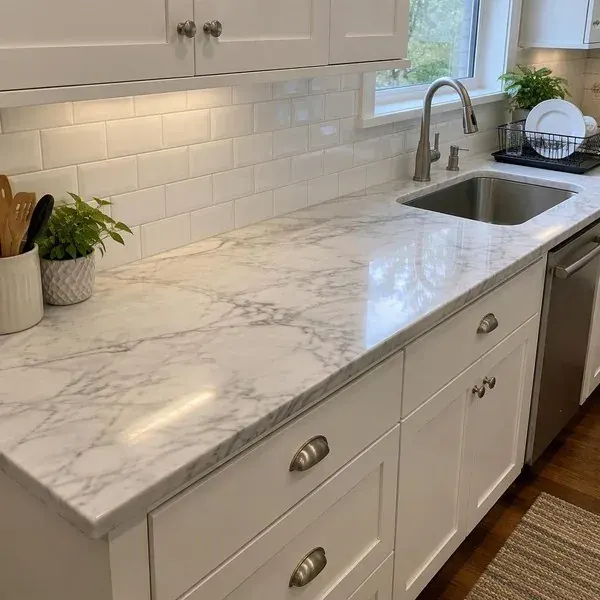
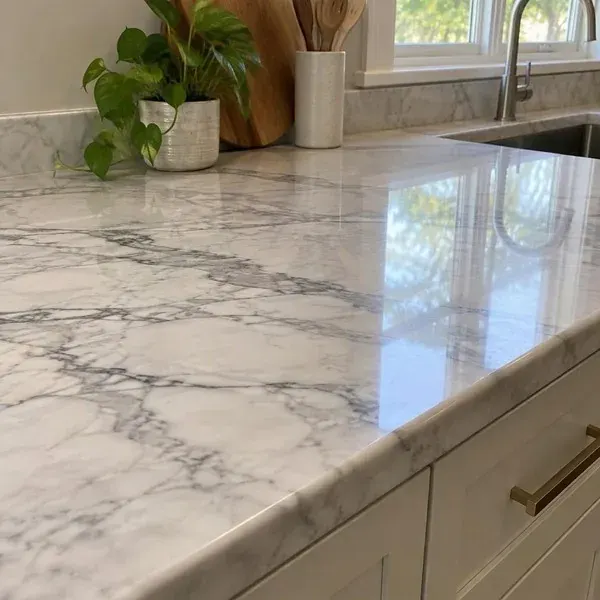
Marble is mostly calcite, a mineral that reacts with acid. Lemon juice, vinegar, wine, tomato sauce and many bathroom cleaners leave dull, slightly rough spots called etch marks.
Etching is a chemical change to the surface, not a stain, and sealer does not prevent it. Sealer does slow down true stains from oil, coffee and colored liquids, which is why marble still needs it.
Over the years, small etches and scratches blend into a soft patina, the same look you see on old European bakery and bistro counters. Some owners love it. If you want a surface that looks unchanged after years of cooking, marble is probably not your stone.
A few habits keep marble looking its best:
- Wipe up acidic spills right away and use coasters under glasses
- Clean with a pH-neutral stone cleaner or mild dish soap and water
- Use cutting boards and trivets
- Check the sealer with a water test every few months
- Use a penetrating, stone-rated sealer rather than a topical wax or coating, which can trap moisture and wear unevenly
When etching or dullness builds up, professional honing and polishing can bring the surface back. Learn more about marble countertop repair and polishing and our stone sealing and polishing service.