Open 7 days: Mon to Sat 7am to 9:30pm, Sun 9am to 9pmLicensed and insured, MHIC #1459775921 Moravia Park Dr b6, Baltimore, MD 21206
Countertop services in Baltimore

Countertop Materials We Fabricate and Install in Baltimore

Most countertop projects start with one question: what should it be made of? TopStone Granite fabricates and installs granite, quartz, marble and butcher block countertops for homeowners and businesses across Baltimore and within about an hour of our Northeast Baltimore shop.

In 15+ years and more than 650 completed jobs, we have cut, seamed, sealed and repaired every common countertop surface. That work shows us how each material behaves long after installation day: which ones etch, which ones chip at the sink and which ones barely need attention.

We are licensed and insured in Maryland under MHIC #145977. Use this guide to narrow your options, then dig into the page for each material.

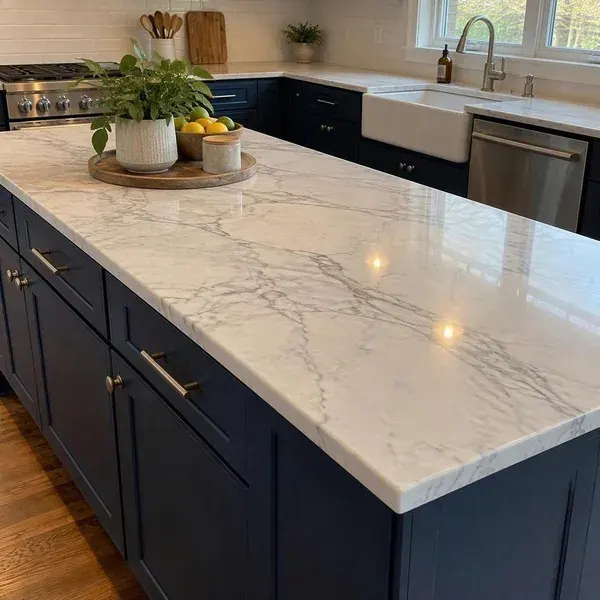
White marble countertop over navy blue cabinets, one of several countertop materials for Baltimore kitchens
Licensed and insured
MHIC #145977
  • 15+years fabricating and installing
  • 650+countertop jobs completed
  • 7 daysopen every day of the week
  • Localshop on Moravia Park Drive, Baltimore

Choosing the Right Countertop Material

No material wins on every count. The right one depends on how you use the room, how much care you are willing to give it and what you want it to look like ten years from now.

Start with these five questions:

  • How do you cook? If hot pans come off the burner and onto the counter, natural granite and quartzite tolerate heat better than quartz, whose resin binder can scorch. Avid bakers often love marble for rolling dough, as long as they accept etching.
  • How much upkeep will you tolerate? Quartz never needs sealing. Granite, marble and quartzite need periodic sealing, and butcher block needs regular oiling or a protective finish.
  • What look do you want? Natural stone gives you a one-of-a-kind pattern, so you should see the actual slab. Quartz gives you consistency from sample to slab.
  • Where is it going? Kitchens, vanities, laundry rooms and outdoor kitchens stress materials differently. Direct sun and freeze-thaw weather rule out some options outside.
  • What is your budget? The material is only part of the price. Edge profiles, cutouts, seams and access to the room move the total as much as the slab does.

If you are torn between two materials, our head-to-head guides on granite vs. quartz and quartz vs. quartzite go deeper on the most common matchups.

Countertop Materials Compared

This table gives a quick read on how each material performs in a typical home. Ratings reflect general industry experience, and individual slabs, brands and finishes vary.

Material Heat Stains Scratches Sealing Daily upkeep Typical price tier
Granite High; trivets still wise Good once sealed; light stones absorb more Very good Periodic, by water test Low Moderate
Quartz Moderate; resin can scorch Excellent; nonporous Very good Never Very low Moderate to high
Marble Good, but etches from acids Fair; acids etch even when sealed Fair; softer stone Regular High Moderate to premium
Quartzite High Good once sealed Excellent Periodic, varies by slab Low to moderate High to premium
Butcher block Low; scorches Fair; depends on finish Low; dents and cuts, but sands out Oil or film finish Moderate to high Lowest to moderate

Price tiers compare typical installed costs and overlap widely, since a premium granite can cost more than an entry-level quartz. Our Baltimore countertop cost guide explains what drives the final number.

Granite Countertops

Natural stone with a speckled or flowing crystalline pattern. Granite handles heat, resists scratches and holds its color outdoors, and it needs periodic sealing.

Explore colors, finishes and installation details on our granite countertops page.

Quartz Countertops

An engineered surface of crushed quartz bound with resin. Quartz is nonporous, never needs sealing and comes in consistent patterns, but it does not like direct heat or outdoor sun.

Compare brands, patterns and warranties on our quartz countertops page.

Marble Countertops

The classic choice for its soft veining and cool surface. Marble etches from acids and develops a patina, so it suits owners who value character over perfection.

Learn about Carrara, Calacatta and care on our marble countertops page.

Quartzite Countertops

A natural stone formed from quartz-rich sandstone, with a marble-like look and exceptional hardness. Some stones sold as quartzite are actually softer dolomite.

See how to check a slab on our quartzite countertops page.

Butcher Block Countertops

Wood tops in maple, walnut or oak that add warmth, especially on islands. Butcher block needs oiling or a sealed finish and careful installation to stay flat.

Read about species, finishes and installation on our butcher block countertops page.

Matching Materials to Each Room

The best material for a kitchen island is not always the best for a laundry room or patio. Here is how the options usually line up by space.

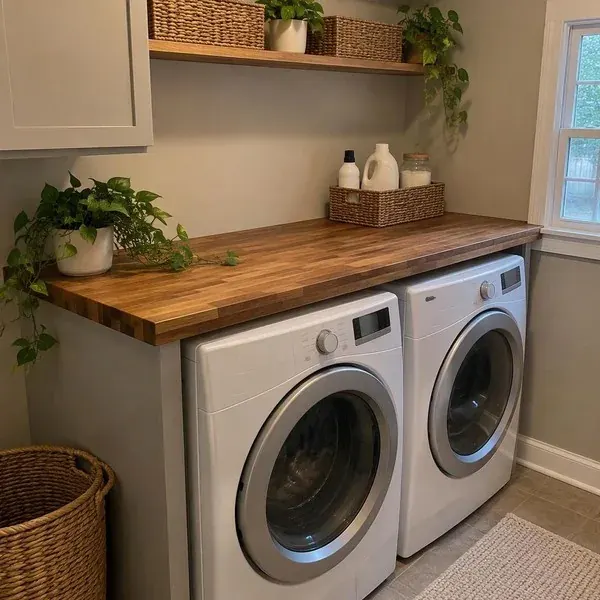
Butcher block laundry room countertop above appliances, showing how countertop materials suit different rooms

Kitchens

Granite and quartz are the workhorses for busy kitchens, while quartzite offers a marble look with similar toughness. Marble and butcher block often work best on an island or baking zone. See our kitchen countertops page for layouts and planning.

Bathroom Vanities

Vanities see less heat and fewer acids, so marble is far easier to live with here than in a kitchen. Small tops can often be cut from remnants. Learn more about bathroom vanity countertops.

Outdoor Kitchens

Sun, rain and freeze-thaw cycles favor dense natural stone. Granite and true quartzite are the usual choices, while most quartz is not rated for outdoor use. Read about outdoor kitchen countertops.

Commercial Spaces

Restaurants, offices and retail counters need surfaces that handle heavy daily traffic and frequent cleaning. Quartz and granite are the most common picks. See our commercial countertops page.

Seeing Slabs Before You Buy

A 4 inch sample can never show you the full movement, color shifts and character of a natural stone slab. For granite, marble and quartzite, we always recommend seeing the actual slab, or a photo of it, before fabrication.

You are welcome to visit our shop at 5921 Moravia Park Drive in Northeast Baltimore during business hours to talk through materials and look at samples. Slabs themselves are usually selected at regional distributors and slab yards in the Baltimore and Washington area, such as MSI's showroom in Jessup.

Once you choose a slab, ask the yard to tag or hold it for your job. During fabrication planning, we lay out each piece on the slab to place seams and veining where they look best. Our seam matching page explains how that layout works.

For quartz, small samples are a reliable guide to color, but bold veined designs vary across a full slab. It is worth seeing a whole slab of any marble-look quartz before you commit.
Quartz Brands We Can Source

Quartz is sold under brand names, and each line differs in pattern, price tier and warranty. Popular quartz lines on the market include Cambria, Silestone, Caesarstone, MSI Q, LG Viatera and HanStone.

Which brands and colors are available for your project depends on distributor stock and your timeline, so ask us which ones we can source. We will help you compare them on look, cost and warranty terms.

Brand choice also affects the manufacturer warranty, since some brands require registration or authorized fabrication for full coverage. Our quartz countertops page explains how quartz warranties work.

Other Surfaces Homeowners Ask About

Granite, quartz, marble, quartzite and butcher block cover most of the projects we see, but they are not the only options on the market. Here is a quick, honest take on a few others you may come across while shopping.

  • Porcelain and sintered stone. Thin, very hard engineered slabs that resist heat, stains and UV. They can chip at edges, and the printed pattern does not always run through the body, which limits edge styles.
  • Soapstone. A soft, dense natural stone that does not stain or etch from acids and darkens with mineral oil. It scratches and dents easily, though marks can be sanded out.
  • Laminate and solid surface. Budget-friendly and easy to shape, with seamless sinks possible on solid surface. Both are more vulnerable to heat and cuts than stone.

If one of these is on your list, ask us. We will tell you plainly whether it fits your project and whether it is something we can help with.

Answers from our team

Countertop Material FAQs

What is the most durable countertop material?

For most kitchens, true quartzite and granite are the most durable all-around choices because they resist heat, scratches and sunlight. Quartz is equally tough against scratches and stains but more sensitive to heat. Marble and butcher block are the softest options.

What countertop material is easiest to maintain?

Quartz needs the least care because it is nonporous and never needs sealing. Wipe it with mild soap and water and use trivets for hot pans. Granite comes close once it is properly sealed.

Can you mix countertop materials in one kitchen?

Yes, and it is a popular approach. A common combination is a butcher block or marble island with granite or quartz on the perimeter. The key is planning heights and edge details so the surfaces meet cleanly.

Which countertop material adds the most value to a home?

Natural stone and quality quartz are widely expected in updated kitchens, so either is a solid choice for resale. The best value usually comes from a material that suits the home's style and is installed well. Our countertop cost guide covers what each option typically costs.

Request a quote

Get Help Choosing a Material

Tell us about your space and how you use it, and we will help you weigh the options honestly. Bring cabinet measurements, inspiration photos or a sample you love.

Call (667) 400-3297
Call (667) 400-3297Quote