Open 7 days: Mon to Sat 7am to 9:30pm, Sun 9am to 9pmLicensed and insured, MHIC #1459775921 Moravia Park Dr b6, Baltimore, MD 21206
Custom Fabrication

Countertop Seam Placement and Vein Matching in Baltimore

Most kitchens need at least one countertop seam, because slabs are only so long and stone has to fit through a door. No fabricator can make every seam vanish, and TopStone Granite will not promise you that. What we do is decide where your seams go, match the color and pattern across them, and set them so tight and flat that most guests never notice.

We have planned and set seams on more than 650 jobs across 15+ years, in everything from narrow Baltimore galley kitchens to long suburban islands. That experience shows in the details: where a seam can safely sit, how to tint the epoxy, and when a jumbo slab is worth the extra cost.

TopStone Granite is licensed and insured. Verify MHIC #145977 on the state lookup.

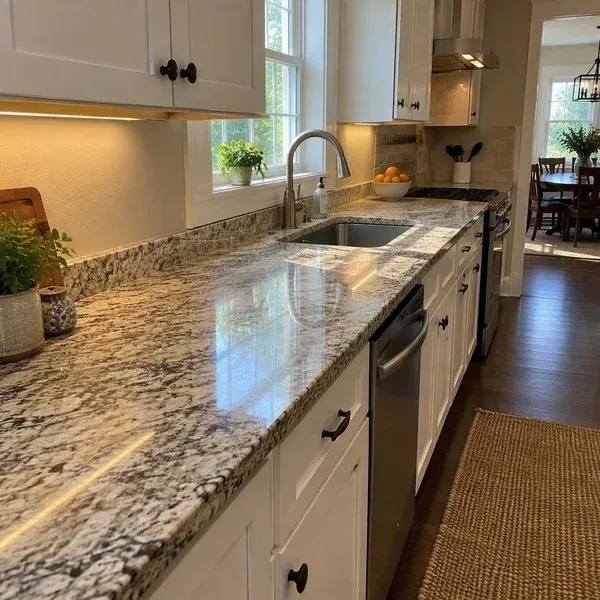
Long stone countertop run in a Baltimore kitchen with a tight, color-matched seam that is barely visible
Licensed and insured
MHIC #145977
  • 15+years fabricating and installing
  • 650+countertop jobs completed
  • 7 daysopen every day of the week
  • Localshop on Moravia Park Drive, Baltimore

Our Seam Matching and Seamless Joint Services

A well-made seam is tight, level and color matched, and it sits where the cabinets support it and the eye passes over it. Seam work is part of every custom countertop fabrication job we take on, and it covers:

  • Seam planning at layout, on the real slab rather than a generic drawing
  • Bookmatching and vein matching for marble, quartzite and veined quartz
  • Epoxy tinted to the stone's background color
  • Seam setters that pull the pieces together and level them flush
  • Finishing the joint so it feels smooth under your fingertips

So what does "seamless" honestly mean? It means a joint typically around 1/16 inch wide or less, with no lip you can catch a fingernail on and no color line that jumps out. On busy granite that can be nearly invisible; on solid white quartz you will be able to find it if you look for it.
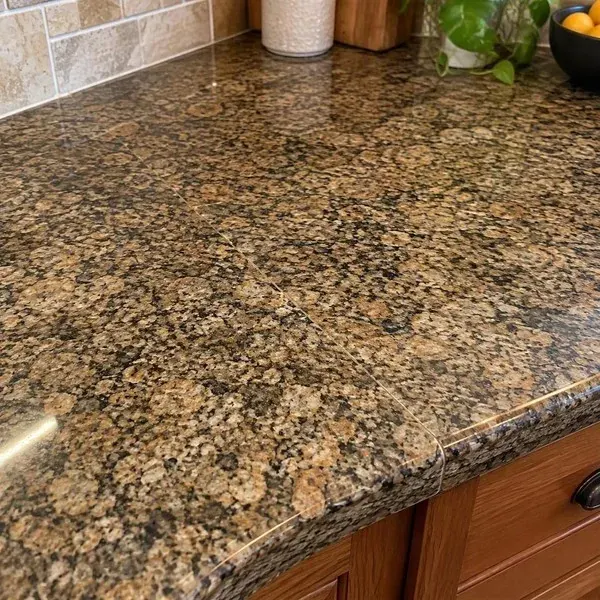
Close-up of a tight, flush seam in a speckled granite countertop with color-matched fill

Where Seams Go and Why

Seam placement is a structural decision first and a visual one second. These are the rules we lay out around before thinking about looks.

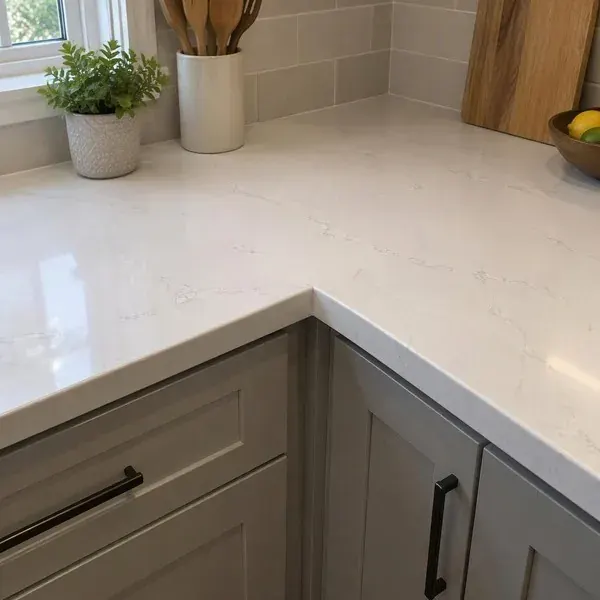
Seam at the inside corner of an L-shaped stone countertop over white cabinets

Keeping Seams Off Dishwashers and Sink Rails

A seam needs cabinet support directly underneath. Over a dishwasher there is no cabinet box, just open space and steam, so the joint flexes and the epoxy weakens.

The thin strips of stone in front of and behind a sink are also poor seam spots. Water sits there and the rails are already the weakest part of the top.

L-Shaped Corners and Long Galley Runs

On an L-shaped counter, a seam at the inside corner is often the strongest and least visible choice. Some layouts use a mitered corner seam; others run one leg straight through and butt the other into it.

Long galley kitchens, common in Baltimore rowhomes, often need a straight seam somewhere along the run. Our rowhome countertop guide covers the access issues that also affect piece size.

How Slab Size Limits Seam Placement

Standard quartz slabs often run about 120 by 55 inches. Jumbo slabs reach roughly 126 to 130 inches long and around 63 to 65 inches wide, and natural stone slabs vary from block to block.

A larger slab can remove a seam entirely, but it costs more and the piece must still fit through your doorway and up your stairs.

How We Make a Seam Disappear

Once the location is set, a good seam comes down to three steps done carefully. Shortcutting any one of them is what produces the wide, uneven seams people complain about.

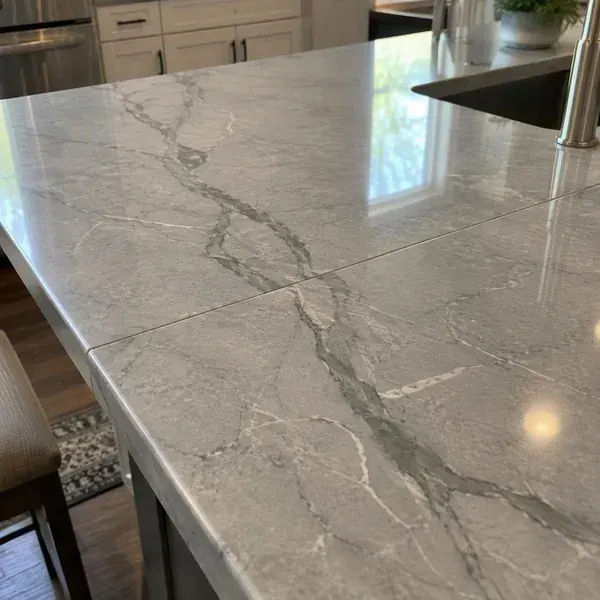
Close-up of a vein-matched seam in white quartz where the gray veining continues across the joint

Laying Out Seams on the Actual Slab

We place the template pieces on your slab so color and veining meet naturally at the joint. On veined stone we show you where the seam lands before any cut.

Taking both sides of a seam from the same slab, side by side, gives the closest color match.

Color-Matched Epoxy

Seam adhesive is tinted on site to the stone's background color, not its veins or flecks. A slightly darker tint usually blends better than one that is too light.

Knife-grade epoxy and clear-curing adhesives each have a place, depending on how much the stone's color varies.

Vacuum Seam Setters and Leveling

Seam setters grip each piece with suction cups and draw them together while letting the installer adjust height. The goal is zero lippage, meaning neither edge sits higher than the other.

After the adhesive cures, excess is cut flush and the surface is finished to match.

Vein Matching Options for Veined Stone

Veined marble, quartzite and quartz turn a seam from a structural detail into a design decision. These are the three approaches, and each uses stone differently:

Option How it works Best for Extra stone needed
Bookmatch Two consecutive slabs open like a book, so the pattern mirrors across the seam Islands, statement walls, waterfall faces Usually two sequential slabs from the same block
Continuous flow Pieces are cut so a vein runs off one piece and onto the next Long perimeter runs and L-shaped corners Some layout waste to line up veins
Slip match Pieces repeat the same pattern side by side rather than mirroring Quartz with a repeating print, long walls Little to none

Veined quartz has its own catch. Many designs run their veins in one main direction, so a seam that cuts across that direction rarely lines up, and a mirrored bookmatch is often not possible at all. We check the vein direction of the exact design before promising a match.

Bookmatching natural stone depends on getting sequential slabs that were cut one after another from the same block, which the supplier has to confirm. Compare veined options on our marble countertops and quartzite countertops pages.

When a Seam Separates or Lifts

A seam that opens, cracks along the joint or develops a ridge is usually telling you something about what is underneath. The common causes:

  • Cabinets settling or shifting, especially in older homes with uneven floors
  • Original epoxy that was poorly mixed, the wrong color or never fully cured
  • A seam placed over a dishwasher or an unsupported span
  • Heavy point loads, such as someone sitting or standing on the counter

The fix is to grind out the old adhesive, level the pieces again and reset the joint with fresh color-matched epoxy. If the cabinets moved, they need to be shimmed or secured first or the seam will open again. Our granite countertop repair service handles seam resets, including leveling a seam that has developed a ridge.

Answers from our team

Countertop Seam FAQs

Can my countertop be installed with no seams?

Yes, if every piece fits within a single slab and can be carried into your home. Short straight runs, small islands and many vanities need no seam at all. Long runs and L-shapes usually need one, though a jumbo slab can sometimes remove it.

How visible will my countertop seam be?

It depends mostly on the stone. Busy granite and heavily patterned quartz hide seams very well, while solid colors and bold-veined white stone make them easier to spot up close. We will tell you honestly what to expect for the slab you choose.

Why is my countertop seam separating?

Usually the cabinets underneath have shifted, the original epoxy has failed, or the seam sits over an unsupported span like a dishwasher. A seam can be reset by cleaning out the old adhesive, leveling the pieces and rebonding them. If moisture or cabinet movement caused it, that has to be fixed first.

Does seam placement affect sink and cooktop cutouts?

Yes. A seam should not run through a cutout or the narrow rails beside it, so we plan seams and sink and appliance cutouts together. That is one reason we need your fixtures or spec sheets at the template.

Request a quote

Plan Your Seams With Us

Share your kitchen layout or drawings and the stone you are considering. We will tell you how many seams to expect and where they are likely to fall before you choose a slab.

Call (667) 400-3297
Call (667) 400-3297Quote