Open 7 days: Mon to Sat 7am to 9:30pm, Sun 9am to 9pmLicensed and insured, MHIC #1459775921 Moravia Park Dr b6, Baltimore, MD 21206
Countertop Installation

Kitchen Countertop Installation in Baltimore

TopStone Granite designs, fabricates and installs kitchen countertops for Baltimore homeowners, from galley kitchens in city rowhomes to open-plan islands in the county. Our shop on Moravia Park Drive cuts granite, quartz, marble, quartzite and butcher block to fit the way your kitchen actually works.

The decisions that make or break a kitchen happen before the stone is cut. Where the island seats people, which sink you buy, how the range fits and where seams land all shape the template, and we help you settle them early.

We bring 15+ years and more than 650 completed jobs to that planning. TopStone is licensed and insured under MHIC #145977 and serves Baltimore plus about an hour's drive around it.

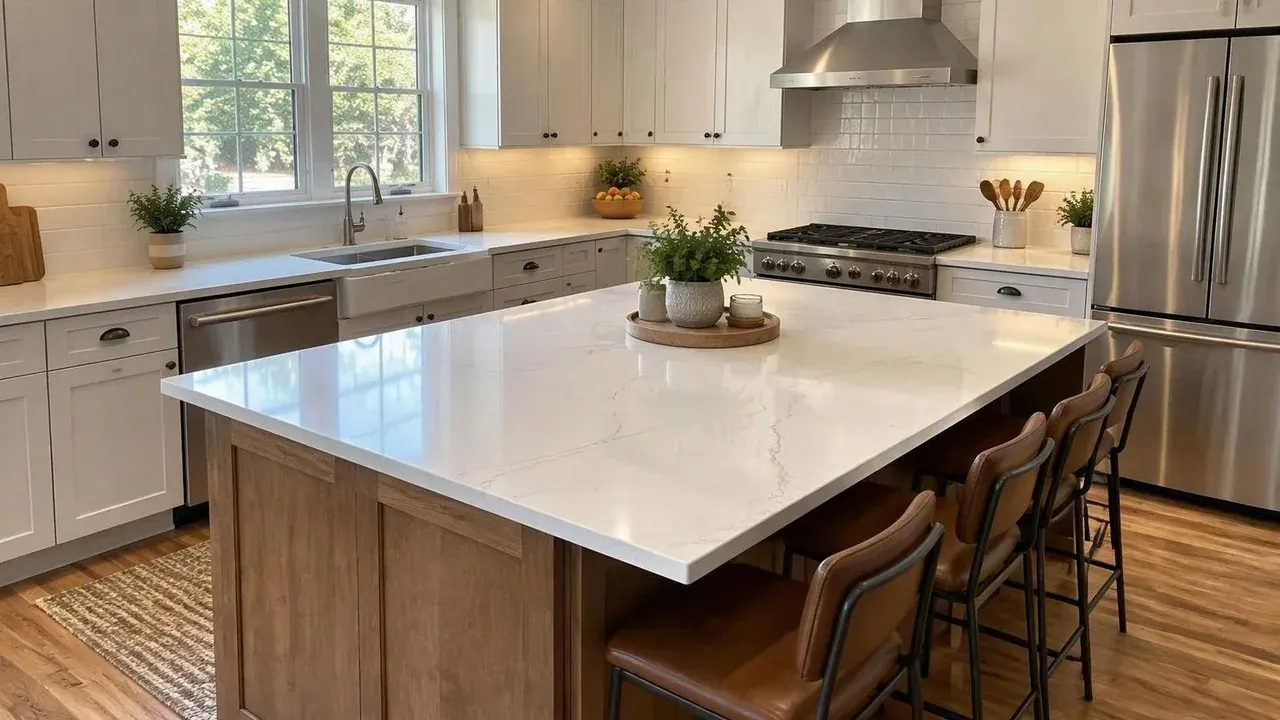
White quartz kitchen countertops in window daylight after a kitchen countertop installation in Baltimore
Licensed and insured
MHIC #145977
  • 15+years fabricating and installing
  • 650+countertop jobs completed
  • 7 daysopen every day of the week
  • Localshop on Moravia Park Drive, Baltimore

Our Kitchen Countertop Installation Services

A kitchen rarely has just one countertop. We fabricate every surface in the room as one coordinated job, so edges, heights and colors line up from end to end:

  • Perimeter countertops along the walls
  • Kitchen islands, including seating overhangs and waterfall ends
  • Peninsulas that divide the kitchen from a dining or family room
  • Raised bar ledges and two-level islands
  • Coffee, baking and beverage stations

We work on full remodels alongside your contractor or cabinet installer, and on countertop-only swaps where the cabinets stay. From layout advice through templating, fabrication and installation, one team handles your stone. For how a standard job runs, see our main countertop installation page.
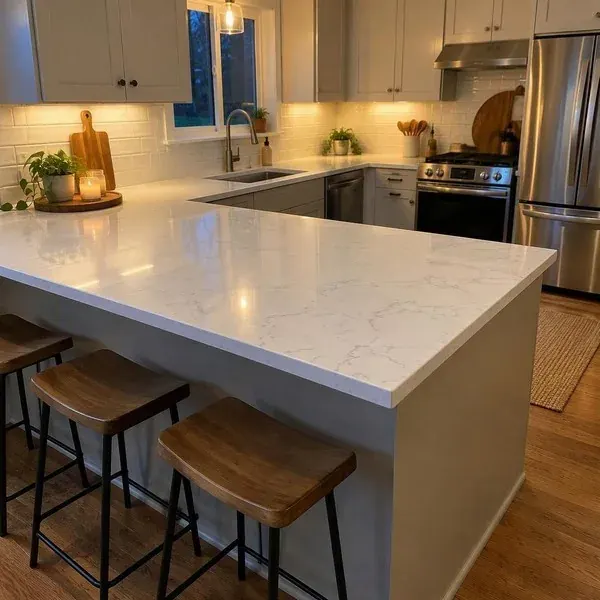
Quartz peninsula countertop with seating in an evening-lit Baltimore kitchen

Choosing a Countertop Material for Your Kitchen

Start with how you cook, not with a sample board. Each of these materials is right for someone, and wrong for someone else.

Granite for Busy, Heat-Heavy Kitchens

Granite tolerates hot pans, dough work and daily abuse better than most surfaces. Every slab is unique, so you pick the exact stone you get.

The trade-off is sealing: most granites need resealing every year or two to resist oil and wine stains. See our granite countertops page for colors and finishes.

Quartz for Low Maintenance

Quartz never needs sealing, and its pattern is consistent from slab to slab, which helps with large islands. It resists stains from coffee, turmeric and red sauce.

Its weak point is heat, because the resin can scorch or discolor under a hot pot, so trivets are a must. Compare brands and colors on our quartz countertops page.

Marble and Quartzite for a Statement Kitchen

Marble gives the classic veined look, but it is soft and etches when acids like lemon or vinegar touch the polish. True quartzite looks similar and is harder than granite.

The catch is that some stones sold as quartzite are really marble or dolomite. Our quartzite countertops page and quartz vs. quartzite guide explain how to tell.

Butcher Block for Islands and Mixed-Material Kitchens

A wood island against stone perimeter counters warms up a kitchen and gives you a place to knead and chop. Wood needs regular oiling and should stay away from the main sink.

Many homeowners pair a butcher block countertop island with granite or quartz where the water and heat are.

Designing Your Kitchen Island Countertop

The island is usually the largest single piece of stone in the house, and it gets the most use. Plan seating, supports and appearance together, because each one affects the others.

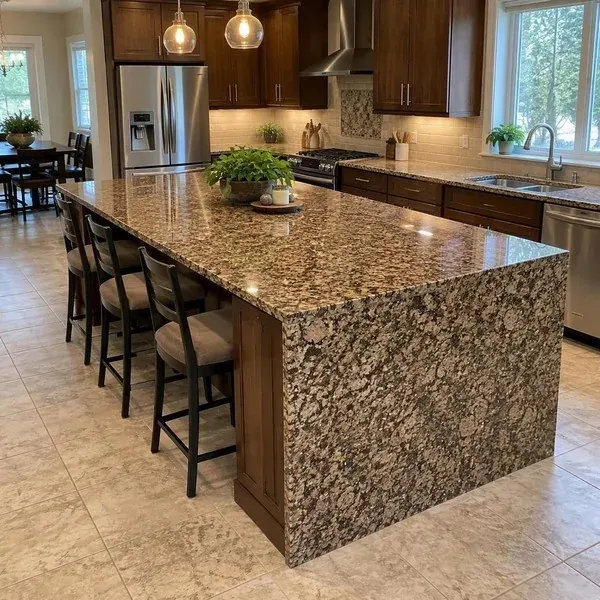
Waterfall island with a seating overhang in a modern Baltimore kitchen with stone countertops

Overhangs, Seating and Hidden Supports

The National Kitchen and Bath Association recommends about 15 inches of knee space at a 36-inch counter and 12 inches at a 42-inch bar height. Allow roughly 24 inches of counter width per stool.

As a common industry guide, 3cm stone can overhang about 10 inches without added support, and less for 2cm. Deeper seating needs steel brackets, flat bars or corbels, which are fitted to the cabinets before templating.

Waterfall Ends and Two-Tone Islands

A waterfall end carries the stone down the side of the island to the floor, with the pattern wrapping around a mitered corner. A two-tone kitchen pairs a dark or wood island with lighter perimeter counters.

Both decisions affect slab count and seam layout, so make them before you choose a slab. See our waterfall edge countertops page for how the miters are built.

Sinks, Cooktops and Appliance Cutouts

Your countertop is templated around the fixtures, so the fixtures need to be chosen first. Have model numbers or spec sheets ready at template for each of these:

  • Undermount sinks sit below the stone and need the exact bowl size for a clean polished reveal.
  • Farmhouse or apron-front sinks must be installed in the cabinet before we template.
  • Slide-in ranges need precise side clearances and often a notch at the back.
  • Downdraft vents and cooktops need cutouts sized to the manufacturer's spec.
  • Pop-up outlets in islands need a hole drilled exactly where the electrician has run power.

Read more on our sink and appliance cutouts page.

Planning Seams in L-Shaped and Galley Kitchens

Slabs come in limited lengths, often around 9 to 10 feet for granite and up to about 10 1/2 feet for jumbo quartz. Most kitchens need at least one seam, and where it lands matters more than whether there is one.

In an L-shaped kitchen, the seam usually sits near the corner where the two runs meet, which keeps both pieces strong and easier to carry. In a long galley, we look for a spot away from the sink and dishwasher, where a seam would see constant water and the weakest stone. Veined materials need the pattern lined up across the joint, which our countertop seam matching work covers.

Replacing Kitchen Countertops Without a Full Remodel

Many homeowners searching for a kitchen remodel in Baltimore really need new tops on cabinets that are still sound. That can save a large share of the cost of a full renovation.

Before we quote, we look at these points:

  • Cabinet condition. Swollen particleboard under the sink or loose face frames should be fixed first.
  • Countertop height. Laminate tops and 3cm stone sit at slightly different heights, which affects the dishwasher's mounting and the range's fit against the counter.
  • Dishwasher fastening. Dishwashers screwed into a laminate top need side mounting brackets under stone.
  • Backsplash. Removing the old tops usually damages the bottom row of tile, so plan to redo or extend it.

What Shapes the Cost of Kitchen Countertops

Layout drives kitchen pricing as much as material does. An island that needs a second slab, a waterfall end that adds mitered panels, or a peninsula that forces an extra seam can change the total more than switching colors.

Other kitchen-specific factors include the number of cutouts for sinks, cooktops and outlets, steel supports for seating overhangs, and removal of the old tops. Our countertop cost guide walks through each driver, and your quote itemizes them.

Answers from our team

Kitchen Countertop FAQs

What is the most durable kitchen countertop material?

Granite and true quartzite are the hardest, most heat-tolerant natural options, as long as they are sealed. Quartz is the most stain resistant and needs no sealing, but it is less tolerant of heat. The best choice depends on whether hot pans or spills are your bigger risk.

How far can a kitchen island countertop overhang without supports?

A common industry guide is about 10 inches for 3cm stone and around 6 inches for 2cm, and quartz manufacturers publish their own limits. Anything deeper needs hidden steel supports or corbels. We confirm the right support for your stone and layout at the estimate.

Should I choose my sink before my countertop?

Yes. The sink cutout is cut from your sink's actual template, so the sink and faucet should be on site when we measure. Changing sinks after fabrication usually means recutting or a new piece of stone.

Can new countertops go on old cabinets?

Yes, if the cabinets are level, solidly fastened and free of water damage. Signs of trouble include doors that no longer close square, a soft cabinet floor under the sink, or gaps between the cabinets and the wall.

Can you match a new island to my existing countertops?

With quartz, we can often match the same color code, though small differences between production runs can occur. Natural stone varies from slab to slab, so an exact match years later is rarely possible. A contrasting island is often the better-looking choice.

Request a quote

Plan Your New Kitchen Countertops

Bring your layout, appliance list and a few photos, and we will help you plan island overhangs, sink choices and seam placement at your estimate. Call, email or use the form below to get started.

Call (667) 400-3297
Call (667) 400-3297Quote