Open 7 days: Mon to Sat 7am to 9:30pm, Sun 9am to 9pmLicensed and insured, MHIC #1459775921 Moravia Park Dr b6, Baltimore, MD 21206
Countertop services in Baltimore

Custom Countertop Fabrication in Baltimore

TopStone Granite turns raw slabs of granite, quartz, marble and quartzite into finished countertops shaped to your exact cabinets, walls and appliances. Custom countertop fabrication is everything between the measurement and the install: slab layout, cutting, edging, polishing and the specialty details that make a kitchen or bar one of a kind. It is our priority service and the heart of what we do.

We fabricate for homeowners, interior designers, builders and contractors in Baltimore and anywhere within about an hour's drive. Our team brings 15+ years of stone experience and 650+ completed jobs, and we are licensed and insured under MHIC #145977.

Because we fabricate and install, the people who cut your stone answer for how it fits. That matters most on the jobs that go beyond a straight run: waterfall islands, curved bar tops, matched seams and inlaid logos.

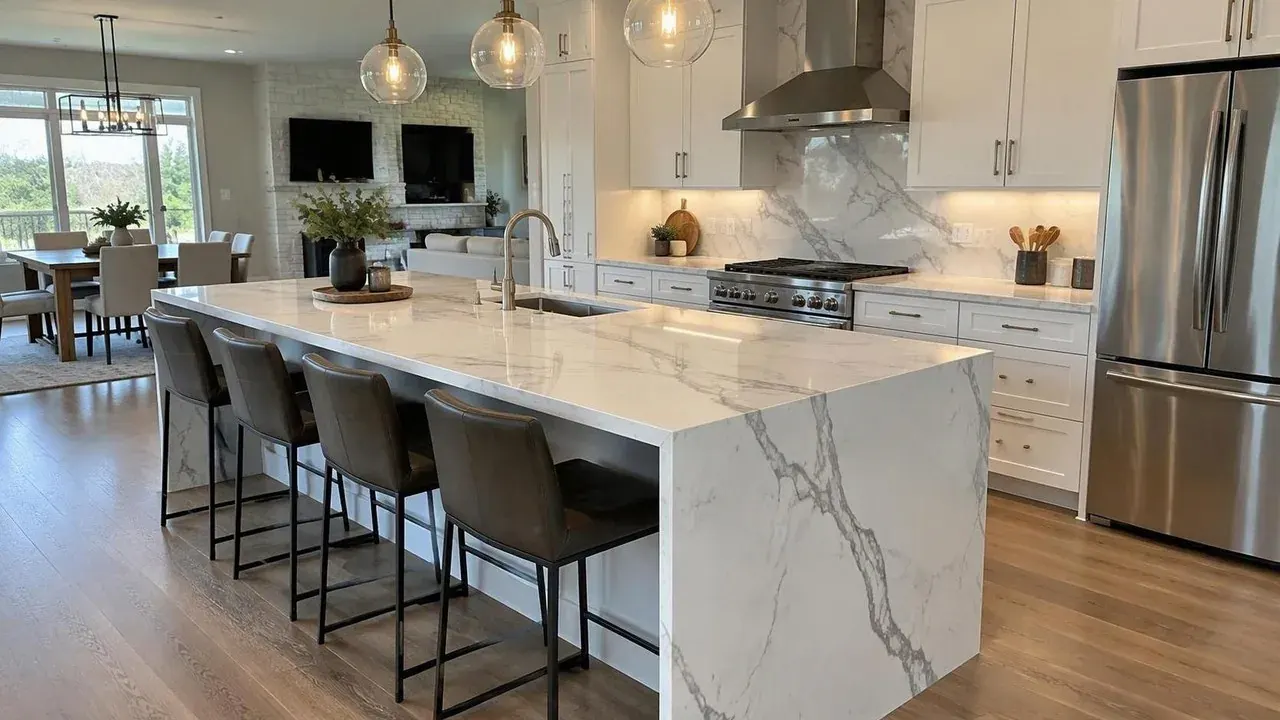
Custom fabricated marble waterfall island with veining carried down the side in an open Baltimore kitchen
Licensed and insured
MHIC #145977
  • 15+years fabricating and installing
  • 650+countertop jobs completed
  • 7 daysopen every day of the week
  • Localshop on Moravia Park Drive, Baltimore

Our Custom Countertop Fabrication Services

Fabrication is the work that happens to a slab after it leaves the supplier's rack and before it reaches your cabinets. Every countertop we make goes through some or all of these steps:

  • Cutting each piece to the template, including curves, angles, clipped corners and notches
  • Edge profiling, from a simple eased edge to a built-up mitered apron
  • Polishing exposed edges so they match the face of the slab, whether polished, honed or leathered
  • Sink, cooktop, faucet and appliance cutouts, cut to the manufacturer's spec
  • Seam preparation so joints close tight and flat on site
  • Specialty details: waterfall legs, inlays, drainboard grooves and lighting channels

Big-box stores typically sell the countertop, then hand measuring, cutting and installing to a third-party fabricator you never meet. When a measurement is off, you call the store and the store calls the shop. Working with the fabricator directly puts your questions in front of the people actually shaping your stone.

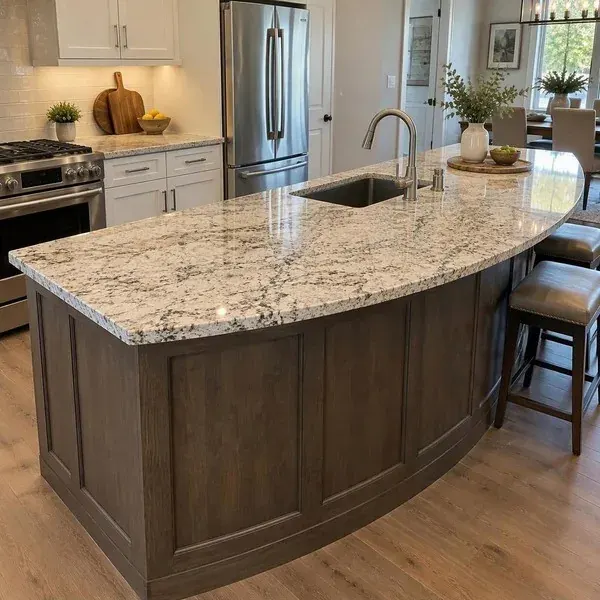
Custom curved stone countertop piece fabricated to follow a curved kitchen cabinet run

From Template to Finished Slab

Every custom top follows the same core sequence. These are the four stages that decide quality; the full timeline, including tear-out and install day, is on our countertop process page.

Templating and Measurement

We template only after base cabinets are set, level and fastened, because stone takes the shape of whatever it sits on. Whether captured digitally or with physical template strips, the template records every wall, corner, overhang and opening, typically to within about 1/16 inch.

Your sink, faucet and cooktop, or their exact spec sheets, need to be on hand that day.

Slab Layout and Vein Planning

Before any cut, the template pieces are positioned on your actual slabs. This is where we decide which stretch of veining runs along the island front, where seams fall and how the pattern turns a corner.

On veined marble, quartzite and veined quartz, you can review the layout with us before cutting starts.

Cutting, Edging and Polishing

Pieces are cut to the template, then edges are profiled and polished through progressively finer abrasives until they match the slab face. Across the industry, shops use a mix of bridge saws, CNC routers, waterjets and skilled hand finishing; the right method depends on the shape and the stone.

Every inside corner on a cutout is rounded, because a sharp corner concentrates stress and invites cracks.

Dry Fit and Quality Check

Before a top leaves the shop, pieces that meet at a seam or miter are fitted together to check alignment, color and pattern flow. Edges are checked for chips and cutouts are checked against the sink and appliance specs.

A problem caught here costs minutes. The same problem found on install day costs a remake.

Curves, Radius Ends and Notched Pieces

Straight runs are the easy part of a kitchen. Custom fabrication earns its name on pieces like these:

  • Curved bar tops and radius island ends that follow a cabinet arc
  • Clipped or angled corners on peninsulas that sit in a walkway
  • Notches around columns, chimney breasts, radiators and window returns, all common in older Baltimore homes
  • Bar tops notched to wrap a post, wall end or pass-through

A curve has to be templated as a true curve, not approximated with short straight segments, and the edge profile has to run smoothly all the way around it. Tight inside radii and narrow necks of stone are where slabs most often crack in handling. We plan seam locations and support around those weak points before cutting.

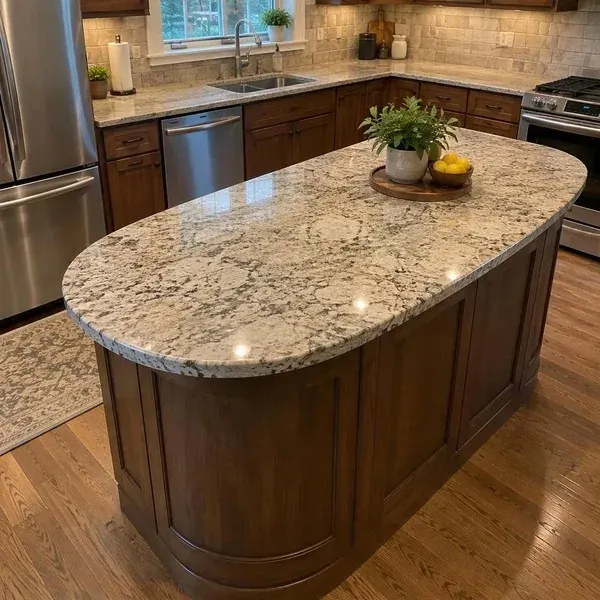
Custom radius stone countertop finished along a curved kitchen wall in a Baltimore home

Custom Design Options We Fabricate

The details below are what separate a fitted countertop from a custom one. Each has its own page with the design choices, materials and trade-offs explained.

Edge Profiles

Eased, beveled, bullnose, ogee and mitered edges each change the look of a top and how well it shrugs off chips. Compare them in our guide to countertop edge profiles.

Waterfall Edges

A waterfall folds the countertop down the side of an island to the floor, joined at a 45 degree miter so the pattern wraps the corner. See how we build waterfall edge countertops.

Seam Placement and Vein Matching

Seams are planned on the slab, not just on a drawing, so they land in quiet spots and the veining lines up. Read about our countertop seam matching.

Countertop Lighting

LED channels under an overhang, or light behind translucent stone, are planned and routed during fabrication. See our countertop lighting installation options.

Materials We Fabricate

Each stone behaves differently on the saw and in your kitchen. Here is one honest trade-off for each; our countertop materials guide goes deeper.

Material Why people choose it The trade-off to know
Granite Hard, heat tolerant, every slab unique Needs periodic sealing, and pattern can shift from one end of a slab to the other
Quartz Consistent color, non-porous, low upkeep Can scorch or discolor under a hot pan
Marble Classic veining that suits waterfalls and baking stations Etches from lemon, wine and vinegar, and edges chip more easily
Quartzite Marble-like look with granite-level hardness Harder to cut and polish, and some stones sold as quartzite are softer than the label suggests
Butcher block Warm, quiet and refinishable Needs regular oiling and does not like standing water

Small projects like vanities, laundry tops and bar tops can often be cut from leftover pieces. Ask about remnant pricing when you call.

Fabrication for Designers and Contractors

Interior designers, kitchen dealers and general contractors need a fabricator who reads drawings, keeps dates and does not improvise. We work from your plans, elevations and finish schedule, and we flag conflicts such as an overhang without support or a seam over a dishwasher before they reach the slab.

We coordinate templating with your cabinet installer and schedule installation around your other trades. If your client has already bought slabs from a distributor, ask us about fabricating customer-supplied material; we inspect slabs for cracks, fissures and resin repairs before anything is cut. For repeat work, ask about trade pricing and scheduling.

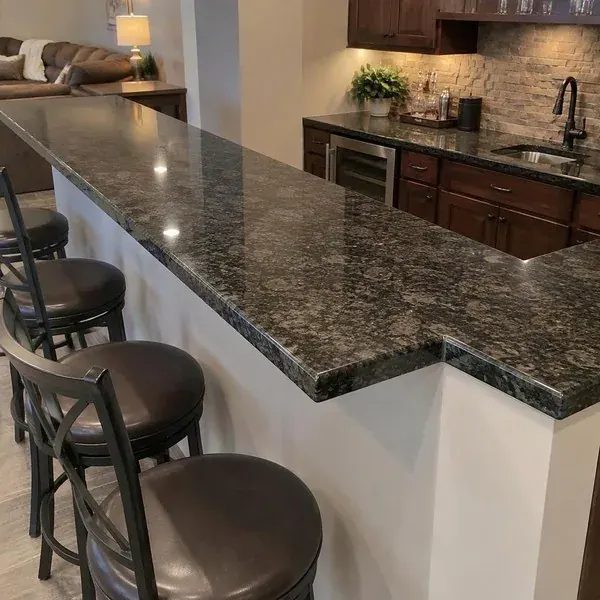
Fabricated stone bar top with a notched corner built from a designer's drawings

Dust Control in Our Fabrication Shop

Cutting, grinding and polishing stone releases fine crystalline silica dust, and engineered quartz contains the most. We follow OSHA's respirable crystalline silica standard, which caps worker exposure at 50 micrograms per cubic meter of air averaged over an 8-hour day and relies on controls such as water at the point of cutting.

The risk is to the people cutting stone, not to the family using a finished countertop. For the full picture, read our guide is quartz safe?

What Drives the Cost of Custom Fabrication

Two kitchens with the same square footage can price very differently. These are the fabrication details that move the number most:

  • Slab count and yield: a long island, a waterfall or tight vein matching can push a job onto an extra slab.
  • Edge profile: priced by the linear foot, with ogee and mitered aprons costing more than an eased edge.
  • Cutouts: each sink, cooktop and faucet hole adds labor, and undermount cutouts need fully polished edges.
  • Seams and miters: every joint needs layout, bonding and finishing time.
  • Curves and notches: shaped pieces take longer to cut and finish than straight runs.
  • Specialty details: inlays, drainboards and lighting channels each add their own steps.

Our Baltimore countertop cost guide explains how these drivers combine with material and installation costs.

Fabrication Mistakes We Plan Around

Most countertop problems that show up years later were baked in at fabrication. These are the ones an experienced shop designs out from the start:

  • Templating on unlevel cabinets: the top rocks, gaps open at the wall and seams sit uneven.
  • A seam over the dishwasher: an unsupported joint over a steam source is the most common seam failure.
  • Thin rails beside a sink or cooktop: a narrow strip of stone in front of or behind a cutout can crack in transport or after install.
  • Overhangs without support: most fabricators add brackets or corbels once a 3 cm stone overhang passes roughly 10 to 12 inches.
  • Slabs from different lots: quartz and granite can shift in color between batches, which shows at a seam.

Getting these right on the slab is far easier than fixing them on site. It is also why we ask so many questions at the template.

Answers from our team

Custom Fabrication FAQs

How long does countertop fabrication take?

At most shops, fabrication typically takes one to two weeks after templating, and specialty work such as waterfalls or inlays can add time. We confirm your template-to-install timeline at your estimate, based on your material and the details you choose.

Can I see my slab before it is cut?

Yes, and we encourage it for marble, quartzite and veined quartz. We walk you through where each piece and seam will sit on the slab so there are no surprises when the stone arrives.

Can you fabricate a slab I bought from a supplier?

Often, yes. We inspect customer-supplied slabs for cracks, fissures and thin spots before cutting, and we will tell you if a slab is too small or too damaged for your layout. Ask us before you buy so you get the right size and quantity.

What is the longest countertop you can make without a seam?

It depends on the slab. Standard quartz slabs often run about 120 inches long, while jumbo slabs reach roughly 126 to 130 inches, and natural stone varies from block to block. Runs longer than the slab need a seam, which we plan with you through our seam matching service.

Do you fabricate countertops for homes outside Baltimore City?

Yes. We work across Baltimore and anywhere within about an hour's drive of our Moravia Park Drive shop, including much of Baltimore, Howard and Anne Arundel counties. See our service areas for the communities we cover most often.

Do you install the countertops you fabricate?

Yes. We template, fabricate and install, so one team is responsible from the first measurement to the final caulk line. For straightforward kitchen and bath replacements, see our countertop installation page.

Request a quote

Start Your Custom Countertop Project

Send us your cabinet layout, designer drawings or a few photos of the space, and tell us what you have in mind. We will talk through materials, details and the next step toward your template.

Call (667) 400-3297
Call (667) 400-3297Quote