Open 7 days: Mon to Sat 7am to 9:30pm, Sun 9am to 9pmLicensed and insured, MHIC #1459775921 Moravia Park Dr b6, Baltimore, MD 21206
Countertop guide

Granite vs. Quartz Countertops: An Honest Comparison From a Baltimore Fabricator

The short answer: granite handles heat and outdoor use better, while quartz needs less upkeep and gives you a more consistent look. Both are excellent kitchen surfaces, so the right choice depends on how you cook, clean and live.

TopStone Granite fabricates, installs and repairs both materials for homeowners across Baltimore and the surrounding counties. With 15+ years in the trade and 650+ completed jobs, we have cut, seamed and repaired enough of each to know where they shine and where they fall short.

This comparison covers how each is made, how they wear, daily care, looks and cost. We are licensed and insured under MHIC #145977.

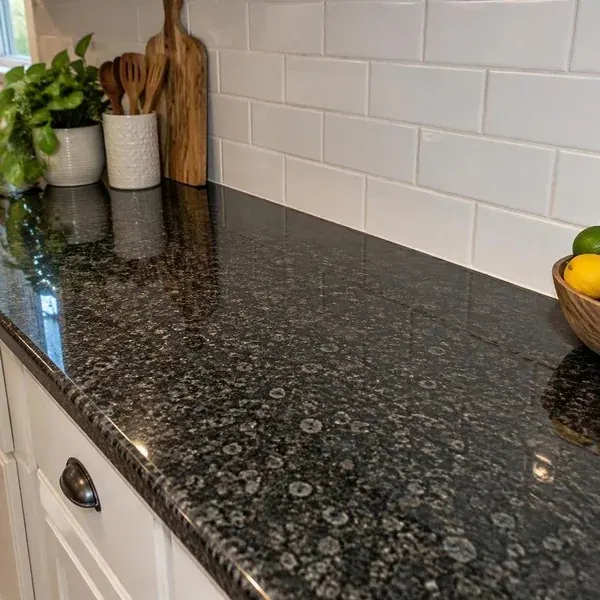
Polished black granite countertop beside a white subway tile backsplash, compared with quartz in this guide
Licensed and insured
MHIC #145977
  • 15+years fabricating and installing
  • 650+countertop jobs completed
  • 7 daysopen every day of the week
  • Localshop on Moravia Park Drive, Baltimore

How Granite and Quartz Are Made

Granite is natural stone. It forms deep underground as molten rock cools slowly into interlocking crystals of quartz, feldspar and mica. Quarries cut it into blocks, saw it into slabs and polish one face, so every slab is one of a kind.

Quartz countertops are engineered. Manufacturers blend crushed natural quartz, typically around 90 percent by weight, with resin binders and pigments, then press and cure it into slabs. That process gives quartz its uniform color and nonporous surface.

The difference in origin explains almost everything else on this page. Granite behaves like rock, and quartz behaves like a stone and resin composite.

Granite Quartz
Origin Natural stone, quarried Engineered, about 90% quartz plus resin
Heat Very heat tolerant Resin can scorch or discolor
Scratches Very hard, resists knives Very hard, resists knives
Stains Porous, needs periodic sealing Nonporous, no sealing
Outdoor use Well suited Most brands not rated for sun
Look Unique natural pattern Consistent, wide design range
Repairs Chips blend well with color-matched fill Chips repairable, harder to hide on solid colors

Heat, Scratches and Chips

Granite tolerates a hot pan better than almost any other countertop. Repeated direct heat in one spot can still stress the stone, so trivets are a good habit. Quartz is more sensitive because its resin can scorch, yellow or crack under high direct heat, and most quartz manufacturers exclude heat damage from their warranties.

Both materials resist scratches from everyday knives and cookware. Both can chip, usually at the edge near the sink or dishwasher where pots and dishes get knocked. A rounded edge helps; see our countertop edge profiles guide for the shapes that hold up best.

When damage does happen, both can be repaired. Granite's busy pattern hides color-matched fills well, while a chip in a solid white quartz is harder to make invisible. Our granite countertop repair and quartz countertop repair pages explain what to expect.

Stains, Sealing and Daily Care

Granite is porous to a degree that varies by slab. A sealer slows oil, wine and coffee from soaking in, and most granite needs resealing every so often.

A quick test tells you when: drip water on the surface, and if it darkens the stone within a few minutes, it is time to seal. Our stone sealing and polishing service handles that for you.

Quartz never needs sealing because the resin closes its pores. That makes it the lower-maintenance surface for most busy kitchens. The trade-off is that strong chemicals such as bleach, oven cleaner and high-pH degreasers can dull or discolor quartz, so manufacturers recommend mild soap and water.

For daily care, both do best with a soft cloth and a gentle, pH-neutral cleaner. Wipe up acidic spills on granite promptly, and keep harsh cleaners off quartz.

Looks and Color Options

Granite's appeal is variation. Flecks, swirls and veining shift across each slab, and no two kitchens look the same. That also means the sample you see may not match the slab you get, so choosing from the actual slab matters.

Quartz offers consistency and range. You can get solid whites, concrete grays, soft speckles and marble-look designs with crisp veining, and the slab you install matches the sample closely. Seams in patterned quartz still need careful planning so veins line up across the joint.

If you love the look of marble but want less upkeep, marble-look quartz is a popular middle ground. If you want something no one else has, granite delivers that by nature.
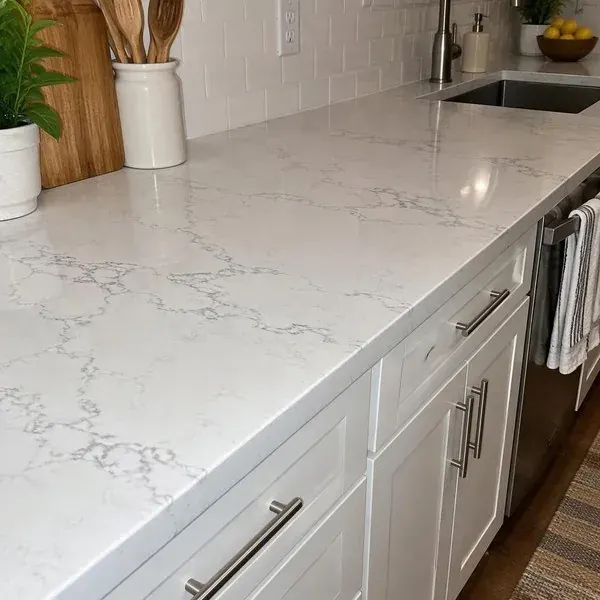
Gray-veined white quartz countertop over white shaker cabinets with an undermount sink

Cost in Baltimore

Granite and quartz overlap heavily on price. Common granite colors usually start a little below entry-level quartz, while exotic granite and designer quartz both reach the top of the market. Edges, cutouts, seams and removal often move the total more than the material choice does.

For per-square-foot ranges, sample kitchen totals and the line items to compare, read our countertop cost guide. For outdoor projects, granite is usually the better value because most quartz is not rated for direct sun.

Which One Fits Your Kitchen

Neither material is better in every way. Match the stone to how your household actually uses the kitchen.

Choose Granite If

  • You cook a lot and set hot pans down without thinking
  • You want a one-of-a-kind natural pattern
  • The countertop is outdoors or in strong direct sun; see outdoor kitchen countertops
  • You do not mind resealing every so often

Learn more on our granite countertops page.

Choose Quartz If

  • You want the lowest-maintenance surface with no sealing
  • You prefer a consistent color, or a clean white or marble look
  • Your kitchen is busy with kids and spills
  • You are matching a sample closely across a large kitchen

Learn more on our quartz countertops page.

Answers from our team

Granite vs. Quartz Questions

Is granite outdated in 2026?

No. Granite remains one of the most requested countertop materials because it is durable, heat tolerant and unique. Styles shift toward quieter patterns and honed or leathered finishes, but granite itself is not going away.

Can I put a hot cup on quartz?

A hot mug of coffee is fine on quartz. Hot pans and slow cookers are the risk, because sustained high heat can scorch or crack the resin. Use a trivet for anything that comes off the stove or out of the oven.

Should I use Clorox wipes on quartz?

Most quartz manufacturers advise against bleach-based products for routine cleaning because they can dull the surface over time. Mild dish soap and warm water, or a cleaner labeled safe for quartz, is the better choice. Check your brand's care guide for specifics.

Is quartz safe to have in my home?

Yes. Finished quartz countertops are safe for everyday use; the silica hazard is to workers during cutting and grinding. Read our full guide, is quartz safe, for the details.

Request a quote

See Both in Person

Visit our Moravia Park Drive shop during business hours or call us to talk through granite and quartz for your layout. We will give you a written quote for each so you can compare them side by side.

Call (667) 400-3297
Call (667) 400-3297Quote