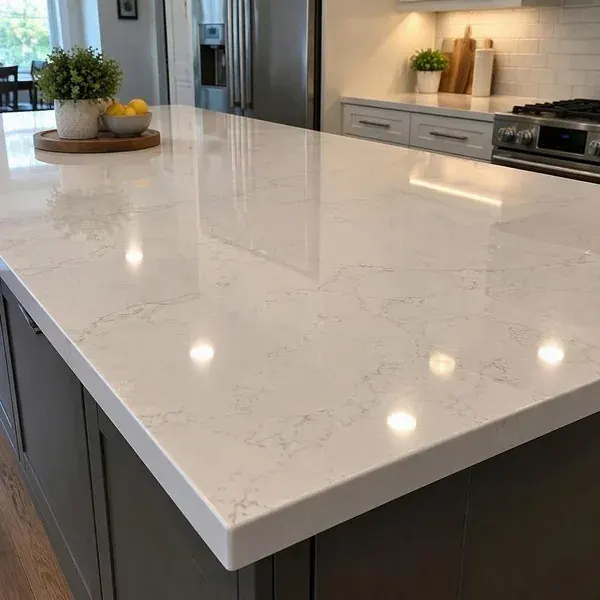
Quartzite usually costs more than granite, and the slab price is only part of the reason. Its hardness makes every fabrication step slower:
- Slower cutting. Blades and router bits must move at a slower feed rate through quartzite than through granite or marble.
- Faster tool wear. Diamond tooling wears out sooner on hard quartz grains, and that cost shows up in the quote.
- Longer polishing. Edges and sink cutouts take more passes to reach a consistent finish.
- Brittleness. Quartzite can chip along edges and natural fissures, so careful handling and simpler profiles reduce risk.
- Yield. Matching veins across seams or waterfall panels may require extra slab.
The slab itself also carries a premium. Popular white and warm quartzites are in steady demand, and supply from individual quarries is limited, so prices follow the market more than with engineered quartz.
Simple eased or beveled edges are often the smart choice on quartzite. Compare options in our edge profiles guide, and see typical installed ranges in our countertop cost guide. To weigh quartzite against granite, quartz and marble, visit our countertop materials guide.