Open 7 days: Mon to Sat 7am to 9:30pm, Sun 9am to 9pmLicensed and insured, MHIC #1459775921 Moravia Park Dr b6, Baltimore, MD 21206
Countertop Installation

Outdoor Kitchen Countertops in Baltimore

TopStone Granite fabricates and installs outdoor kitchen countertops for grill islands, patio bars and poolside kitchens around Baltimore. We cut stone that can sit through a humid Maryland July and a February freeze without cracking, fading or staining.

Most outdoor kitchens are a team effort. A mason, landscaper or deck builder puts up the base, and we template, fabricate and set the stone on top with the cutouts for your grill, sink and side burners.

We have 15+ years in the trade and more than 650 completed jobs behind us. TopStone is licensed and insured under MHIC #145977 and works across Baltimore and about an hour's drive around the city.

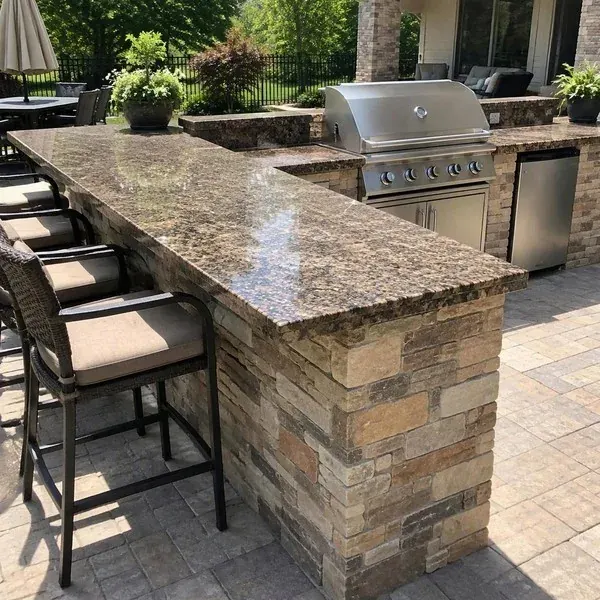
Granite outdoor kitchen countertop with a built-in grill in a Baltimore area backyard
Licensed and insured
MHIC #145977
  • 15+years fabricating and installing
  • 650+countertop jobs completed
  • 7 daysopen every day of the week
  • Localshop on Moravia Park Drive, Baltimore

Our Outdoor Kitchen Countertop Services

An outdoor countertop has to do everything an indoor one does while sitting in sun, rain, pollen and ice. We handle the stone side of the project:

  • Templating the finished base on site
  • Fabricating the tops, bar ledges and any raised sections
  • Cutouts for built-in grills, side burners, sinks and access doors
  • Edge profiles chosen for outdoor wear
  • Installation and sealing of the finished stone

The base builder supplies the structure: the block, stone veneer or steel frame, any gas, water and electrical lines, and the patio or deck beneath it. If you do not yet have a builder, we can talk through what your countertop will need from them. Our main countertop installation page covers how we work on indoor projects.

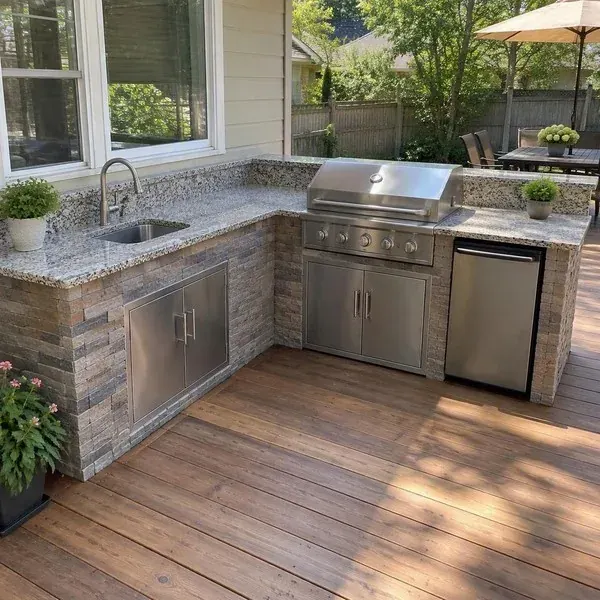
L-shaped outdoor kitchen countertop on a backyard deck in the Baltimore area

Countertop Materials That Hold Up Outdoors in Maryland

Central Maryland weather is hard on stone. Winters bring repeated freeze-thaw cycles, summers bring strong sun and heat, and spring adds pollen and tree sap that can stain a porous surface.

Granite: The Safest Outdoor Choice

Dense, low-absorption granite handles freeze-thaw cycles and UV better than any other common countertop material. It does not fade in sun, and a good sealer keeps sap and grease out.

A leathered or flamed finish cuts glare and gives a little grip when wet. Keep in mind that black and very dark granite gets hot to the touch in full afternoon sun. See our granite countertops page for color options.

Quartzite for a Lighter Look

True quartzite is extremely hard and handles weather well, and it gives you a light, marble-like look that granite cannot always match. It does need sealing, especially in lighter colors.

Some stones sold as quartzite are actually marble or dolomite, which etch and weather faster outdoors. Our quartzite countertops page explains how to confirm what you are buying.

Why Most Indoor Quartz Does Not Belong Outside

Engineered quartz is bound with resin, and UV exposure can yellow or fade it over time. Most quartz manufacturers exclude outdoor installations from their standard warranties.

A few manufacturers make products rated for outdoor use. If you want a quartz look outside, we will check the specific brand's outdoor policy before recommending it.

Grill, Sink and Side Burner Cutouts

Built-in grills are the cutout that trips up most outdoor projects. Each grill maker publishes exact cutout dimensions, and many require an insulated jacket when the grill is built into a combustible frame or enclosure.

That means we need the model numbers for the grill, side burner, sink, refrigerator and access doors before templating. If the appliances are not on site, the spec sheets must be. Read more on our sink and appliance cutouts page.

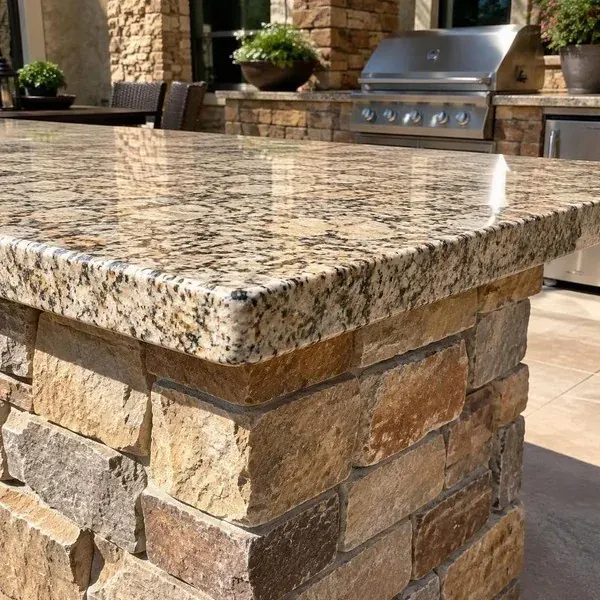
Granite outdoor bar countertop beside a built-in grill cutout on a Baltimore patio

What the Base Needs Before We Template

We template on the finished base, not on a sketch. Before we arrive, the base should meet these conditions:

  • Built and cured. Block or masonry should be complete with mortar cured, or the steel frame fully assembled.
  • Level and flat. The top course has to be level, because stone will not bridge a high spot.
  • A solid deck for the stone. Steel frames usually need a cement board or similar substrate across the top.
  • Overhang support. Bar seating overhangs need steel or masonry support, planned into the base.
  • Drainage. The patio or deck should shed water away from the base so it does not pool at the bottom.
  • Access. Our crew needs a clear path from the driveway to the base, without carrying a slab through the house where possible.
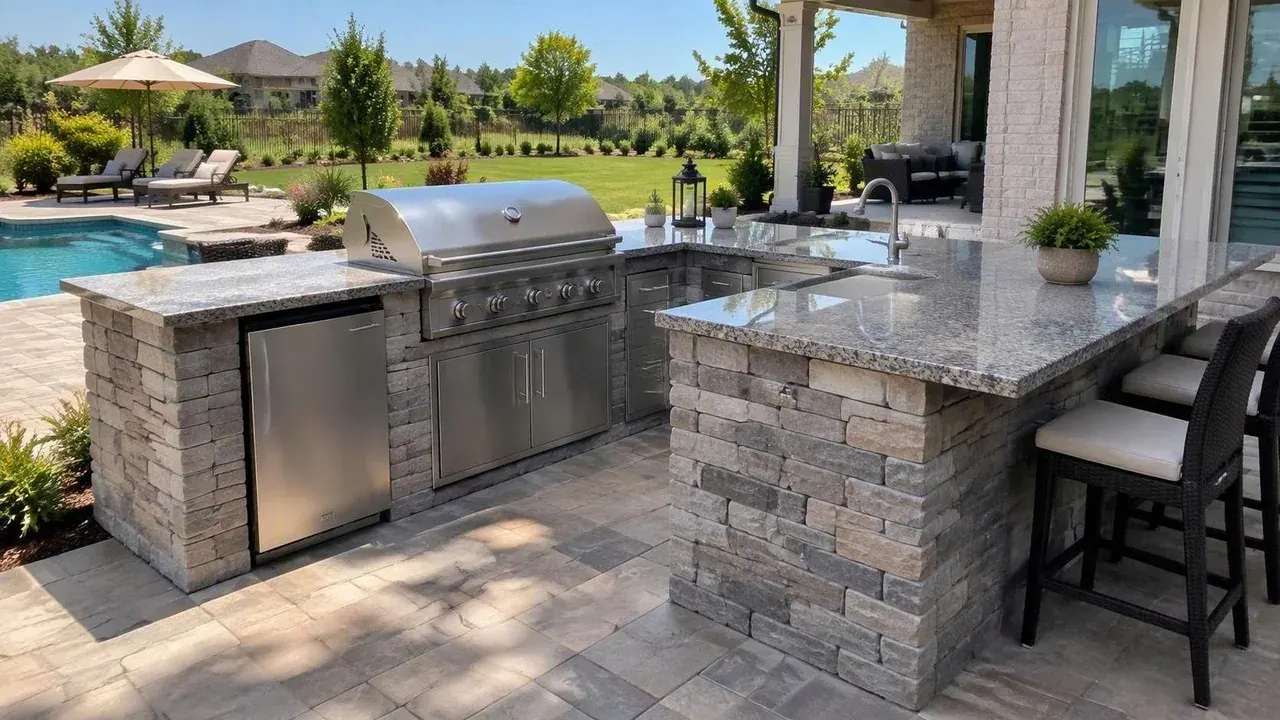
Outdoor stone countertop on a level stacked stone base ready for the Baltimore weather

Sealing and Winter Care for Outdoor Stone

Outdoor stone needs more frequent sealing than kitchen counters. Rain, UV and temperature swings wear the sealer down faster, so plan to test and reseal at least once a year.

Before the first hard freeze, shut off and drain the outdoor sink and its supply lines so water cannot freeze in the pipes. A breathable, fitted cover keeps leaves, snow and sap off the stone through winter. Our stone sealing and polishing service can handle the yearly reseal.

What Drives Outdoor Countertop Cost

Outdoor tops are priced like indoor stone, with a few extra factors that come from working outside:

  • Square footage, including bar ledges and raised serving tiers
  • Stone choice, since dense, low-absorption granites and true quartzite vary widely in price
  • Finish, as leathered and flamed surfaces add a fabrication step
  • The number of cutouts for grills, side burners, sinks, refrigerators and doors
  • Built-up or mitered edges for a thicker look
  • Overhang support and any custom notching around posts or columns
  • Access to the backyard, such as steps, slopes, gates and long carries around the house

For how material and fabrication choices add up, see our countertop cost guide. Your written quote lists each item for your project.

Permits, HOAs and Waterfront Properties

The countertop itself rarely needs a permit, but the rest of an outdoor kitchen often does. New gas lines, electrical circuits and water supply usually require permits and licensed trades, through Baltimore City DHCD or your county's permits office.

Some communities add their own approvals. In Columbia, exterior changes generally go through the village architectural review process, and our Columbia and Ellicott City page has more on the area.

On waterfront lots in Anne Arundel County, land within 1,000 feet of tidal water falls under Chesapeake Bay Critical Area rules, which can limit new patios and structures. See our Annapolis and Glen Burnie page, and check with the county before your base is built.

Answers from our team

Outdoor Kitchen Countertop FAQs

Can quartz be used for an outdoor kitchen?

Standard indoor quartz is generally not recommended outside. UV light can discolor the resin, and most manufacturers exclude outdoor use from their warranties. Granite or true quartzite is the safer choice in Maryland sun.

Will granite crack in a Maryland winter?

Sealed, well-supported granite handles freeze-thaw cycles well. The real risk is water sitting in natural fissures or under an unsupported overhang, then freezing and expanding. Good sealing, a level base and proper support prevent most problems.

Should I cover my outdoor countertops in winter?

A cover is a good idea, as long as it breathes and does not trap moisture against the stone. It keeps off leaves, snow and tree debris that can stain. Always drain the outdoor sink and lines before freezing weather.

When should I schedule outdoor kitchen countertops?

Late winter is the best time to start. That gives your base builder time to finish, and lets us template as soon as the base is ready instead of joining the spring rush. Stone can be installed in most weather, but sealers need dry conditions to cure properly.

What thickness is best for outdoor countertops?

3cm is the standard for outdoor kitchens because it is stronger and less likely to crack over a base. For a heavier, more rustic look, the edge can be built up with a mitered strip to appear 2 to 3 inches thick.

Request a quote

Start Your Outdoor Kitchen Countertops

Send us your base plans and appliance list, or call to set up a measure. Booking in late winter gives you the best shot at an install before the spring rush.

Call (667) 400-3297
Call (667) 400-3297Quote