Open 7 days: Mon to Sat 7am to 9:30pm, Sun 9am to 9pmLicensed and insured, MHIC #1459775921 Moravia Park Dr b6, Baltimore, MD 21206
Countertop Materials

Butcher Block Countertop Installation in Baltimore

Butcher block brings warmth that no stone can match, and it softens a kitchen full of hard surfaces. TopStone Granite installs butcher block countertops for kitchens, islands, coffee bars and laundry rooms throughout Baltimore and nearby communities.

A stone company may seem like an unusual choice for wood, but the skills carry over: precise templating, clean cutouts and an eye for how a countertop will behave years after installation. With 15+ years in the trade and 650+ completed jobs, we can pair a wood island with granite or quartz perimeter countertops in a single project.

We are licensed and insured in Maryland, MHIC #145977. This page covers species, grain styles, finishes and the installation details that keep wood flat through Maryland's humid summers and dry winters.

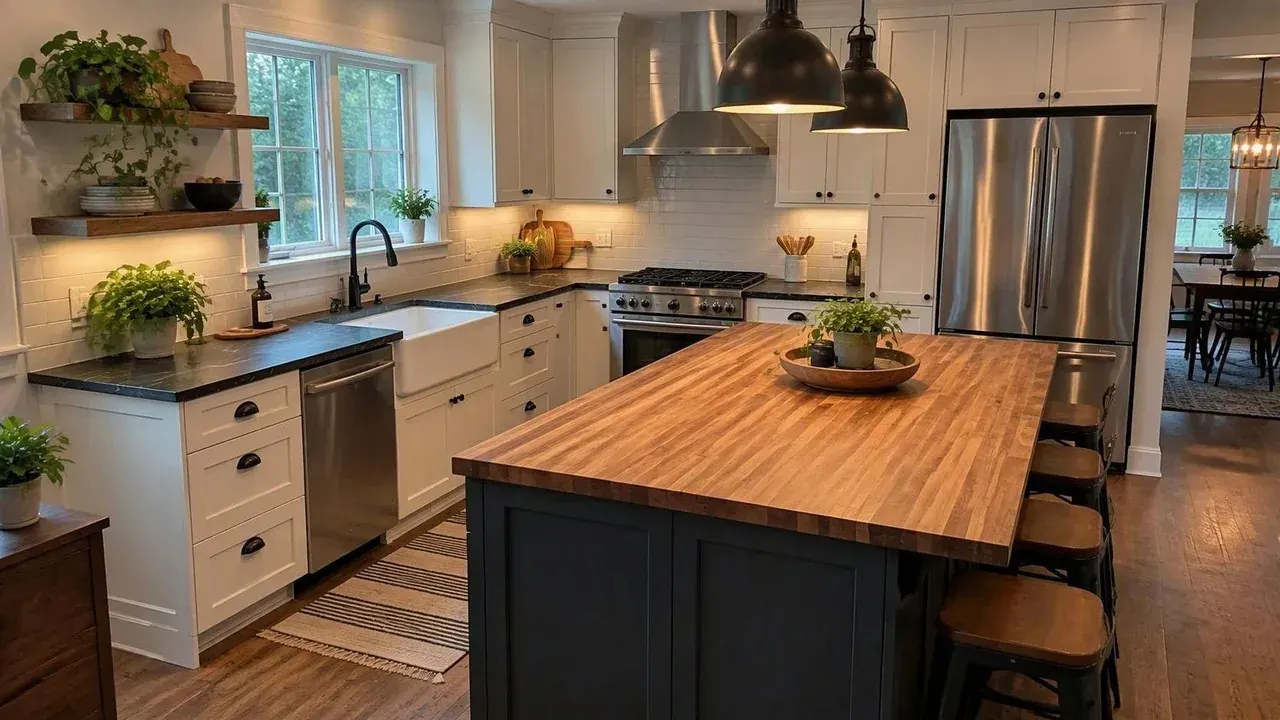
Butcher block kitchen island paired with stone perimeter countertops, a warm butcher block countertop layout
Licensed and insured
MHIC #145977
  • 15+years fabricating and installing
  • 650+countertop jobs completed
  • 7 daysopen every day of the week
  • Localshop on Moravia Park Drive, Baltimore

Our Butcher Block Countertop Installation Services

Butcher block shines in spaces where people gather, prep and work. We install wood countertops for:

  • Kitchen islands, often as a warm contrast to stone around the sink and range
  • Full kitchens in cottages, farmhouse designs and rental units where budget matters
  • Coffee bars, beverage stations and baking centers
  • Built-in desks, window seats and home office work surfaces
  • Laundry room folding counters above front-loading machines

Each job includes measuring, cutting the top to fit your cabinets and walls, sink and cooktop openings, finishing and fastening. For openings in wood or stone, see our sink and appliance cutout work.

Wood Species and Grain Styles

Two choices shape a butcher block top more than any other: the wood species and how the strips are oriented. Together they set the color, hardness, durability and price.

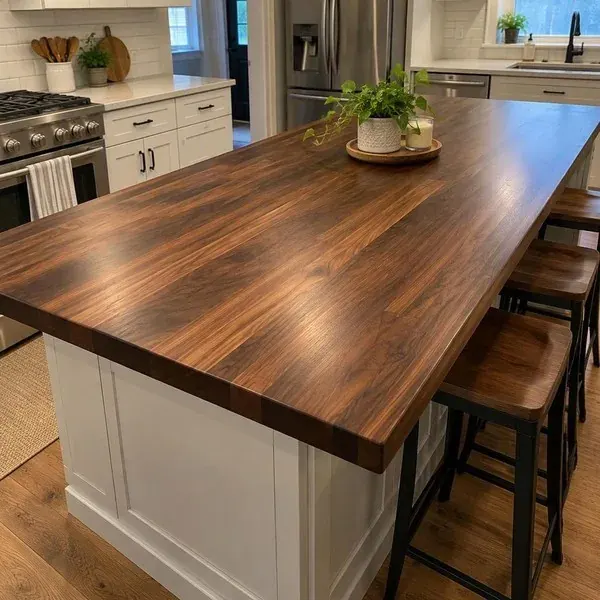
Walnut butcher block island top with rich brown grain, a premium butcher block countertop species

Maple, Walnut and Oak

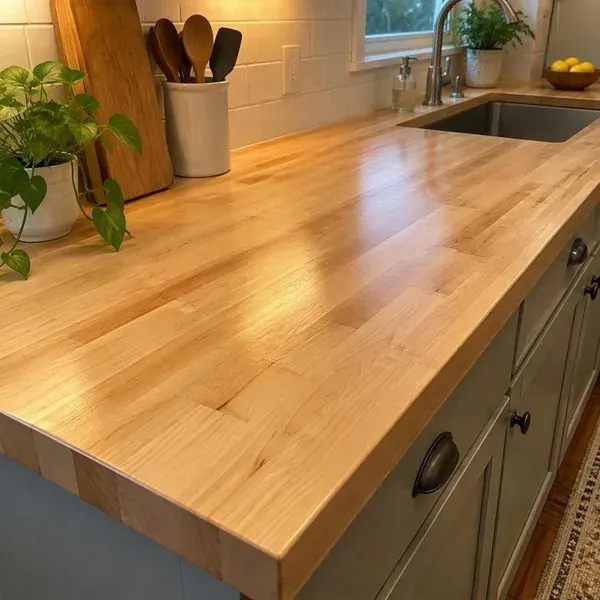
Hard maple is the classic butcher block wood. It is light, tight grained and hard, rating about 1,450 on the Janka hardness scale, and usually moderately priced.

Black walnut has deep chocolate tones and dramatic grain. It is softer, around 1,010 Janka, so it dents more easily, and it typically costs the most. Oak sits in between at roughly 1,290 for red oak and 1,360 for white oak, and white oak's closed pores make it the more water-resistant of the two.
Edge Grain, End Grain and Face Grain

Edge grain strips are glued with their narrow edges facing up. It is the most common style, durable and fairly priced. End grain shows the checkerboard of the wood's growth rings, is gentlest on knives and hides cuts best, but costs the most and absorbs more oil.

Face grain, sometimes called plank style, shows the wide face of each board. It displays the most figure but is the softest surface and more prone to movement, so it suits low-wear areas better than heavy prep zones.

Oil Finish or Sealed Finish

The finish decides whether you can cut on the top and how well it stands up to water. Many kitchens use both: an oiled prep island and a sealed top near the sink.

Oil finishes use food-safe mineral oil or a blend of oil and beeswax. They soak into the wood, so you can chop directly on the surface, and scratches sand out easily. The trade-off is upkeep, since oiled tops need regular reapplication and offer only modest water resistance.

Sealed finishes are film-forming coatings such as tung oil based varnishes or polyurethane. They resist water and stains much better, which suits sink runs and coffee stations. You should not cut on them, and repairs mean sanding and recoating a whole section.

Oiled maple butcher block countertop grain close-up with a satin food-safe oil finish

Installing Wood Countertops So They Stay Flat

Wood moves with the seasons. Baltimore's humid summers swell it across its width, and dry, heated winters shrink it back, so a top installed without allowing for movement can cup, crack or pull away from walls.

These are the installation details that prevent problems:

  • Acclimation. The top should rest in the room, at normal living conditions, for several days before it is finished and fastened.
  • Sealing all six sides. The underside and every cut edge get finish, not just the top. Unsealed undersides absorb moisture at a different rate and cause cupping.
  • Fasteners that allow movement. Screws pass through slotted holes or movement-friendly fasteners, so the wood can expand and contract without splitting.
  • Expansion gaps. A small gap at walls, hidden by the backsplash, gives the wood room to grow.
  • Proper overhang support. Deep seating overhangs get brackets so the top does not sag or twist over time.

Keeping indoor humidity reasonably steady, especially when the heat first comes on in fall, helps any wood countertop stay flat. Measuring and scheduling follow the same steps as our stone jobs, outlined on our process page.

Butcher Block Near Sinks and Dishwashers

Standing water is the main enemy of butcher block. Most problems show up first around the sink edge and above the dishwasher.

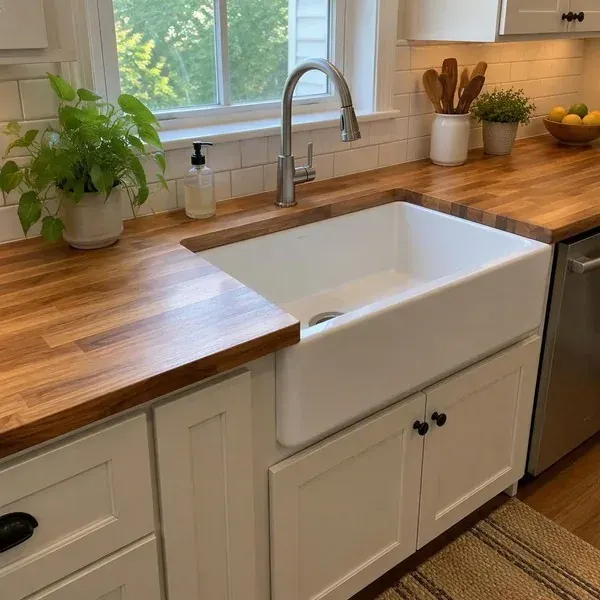
A few precautions make a big difference. Sink areas get a water-resistant sealed finish, and every cut edge at the sink opening is sealed thoroughly. Apron-front farmhouse sinks are a natural match for wood because they keep the exposed edge minimal.

Over a dishwasher, a moisture barrier on the underside of the top blocks rising steam. The dishwasher itself should mount to the cabinet sides rather than screw into the wood. Wipe up standing water rather than letting it sit along seams and edges.

Butcher block countertop around a white farmhouse sink with sealed edges at the sink opening

Pairing Butcher Block With Stone

A wood island with stone perimeter countertops is one of the most popular ways to use butcher block. Stone handles the wet and hot work around the sink and range, while the wood island becomes the prep and gathering space.

A few design tips help the combination look intentional:

  • Repeat a wood tone from the floors or open shelving so the island feels connected
  • Pair warm walnut or oak with white or gray quartz countertops, or maple with dark granite countertops
  • Plan heights carefully, since a 1.5 inch wood top is thicker than 3 cm stone and may need adjusted support to sit level

For layout ideas and the full scope of a kitchen project, see our kitchen countertops page. To compare wood with every stone we install, visit our countertop materials guide.

Caring for Butcher Block Countertops

A few minutes of care each week keeps a wood countertop looking warm instead of worn. The routine depends on the finish.

For oiled tops, clean with warm water and a little mild dish soap, then dry the surface right away. Reapply oil when the wood looks pale or dry. Light scratches, knife marks and small stains can be sanded with fine-grit paper and re-oiled, which is one of wood's biggest advantages.

For sealed tops, wipe with mild soap and water and avoid abrasive pads that dull the film. Do not cut directly on the surface. When the finish wears through in busy spots, the area needs light sanding and a fresh coat.

On either finish, avoid letting water pool along seams or around the sink, and keep bleach and harsh cleaners off the wood. Use a separate cutting board for raw meat, even on an oiled top.

Butcher Block Cost Factors

Butcher block is usually one of the more affordable countertop options, but the range is wide. These are the factors that move the price:

  • Species. Maple and oak are typically moderate, while walnut and other premium hardwoods cost more.
  • Grain style. End grain costs the most because of the labor involved, followed by edge grain, then face grain.
  • Size and thickness. Long runs beyond standard panel lengths, deep islands and thicker tops add material and labor.
  • Finish. A durable sealed finish takes more time to apply than a simple oil finish.
  • Cutouts and pairing. Sink and cooktop openings, and coordinating wood with stone in the same kitchen, add planning and fabrication time.

Our Baltimore countertop cost guide shows how wood compares with stone on price.

Answers from our team

Butcher Block FAQs

Is butcher block a good kitchen countertop?

It is a good choice if you value warmth, a forgiving prep surface and a lower material cost than most stone. It does need regular oiling or a sealed finish, and it can scratch, dent and scorch. Many homeowners get the best of both by using wood on the island and stone near the sink.

Can you put an undermount sink in butcher block?

It is possible, but it is the hardest place for wood to survive. The cut edge around the sink must be sealed with a durable, water-resistant finish and kept dry. Apron-front or drop-in sinks are usually more forgiving choices.

How often does butcher block need oiling?

A new oiled top typically needs oil every week or two for the first month, then about once a month. Oil whenever the wood looks dry or water stops beading on the surface. Sealed finishes do not need oiling but may need a fresh topcoat every few years.

Can you put hot pans on butcher block?

No. Hot pans can scorch the wood and damage the finish, leaving dark rings that may need sanding to remove. Keep trivets near the range and use them for anything coming off the stove or out of the oven.

Request a quote

Get a Butcher Block Quote

Tell us where the wood is going, the size you need and whether it sits near a sink, and we will recommend a species, grain style and finish. If you are pairing wood with stone, we can quote both together.

Call (667) 400-3297
Call (667) 400-3297Quote